Top Pneumatic Valve Manufacturers in China
China’s automation sector gives pneumatic valve buyers a broad supplier landscape, from compact solenoid valves to manifold systems for production lines. The scale is significant. The International Federation of Robotics reported 276,288 industrial robot installations in China in 2023, representing about 51% of global installations. This figure describes robot deployment, not pneumatic valve sales. Still, it helps explain why reliable air-control components matter across manufacturing.
Choosing a manufacturer takes more than comparing catalog prices. Buyers should examine operating pressure, flow capacity, response time, sealing materials, service life, and compatibility with the plant’s control system. Ask for test records, product specifications, and details on quality management. Check whether the supplier can support customization and provide replacement parts after delivery. Small parts matter. A valve that leaks or responds slowly can interrupt a full production cell.
This overview of top pneumatic valve manufacturers in China is intended as a starting point, not a final endorsement. Supplier capabilities can vary by product line, factory, and application. Some public claims are difficult to compare directly, so request evidence and verify samples before placing a large order. The right choice depends on the operating environment, maintenance resources, and required service life—not just the lowest quotation.
What Pneumatic Valves Are and How They Work
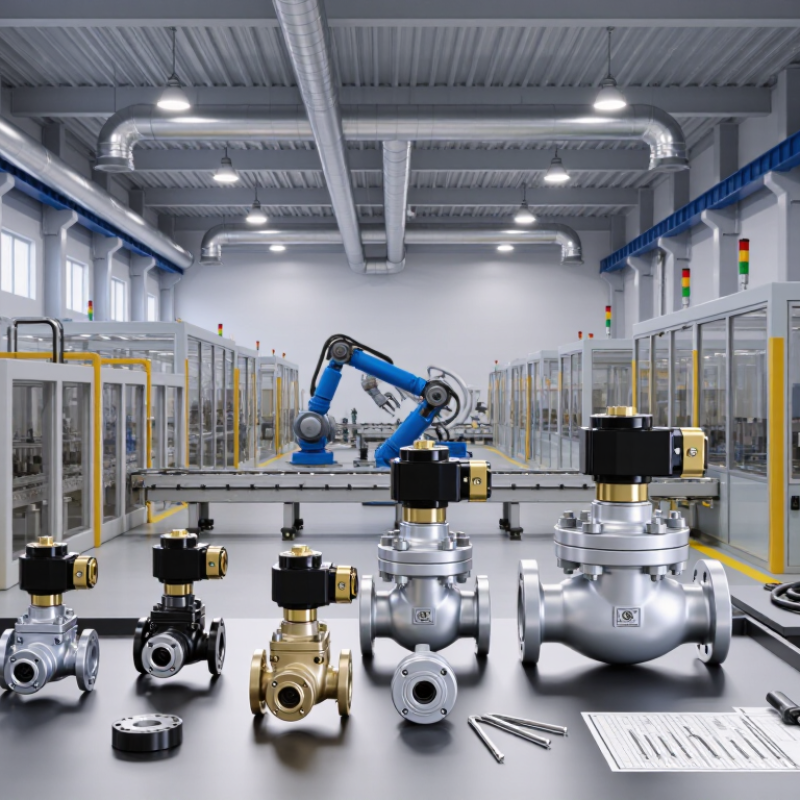
Pneumatic valves control the movement and pressure of compressed air in machinery. They direct air toward an actuator, such as a cylinder, or release it from the system. That airflow can extend a piston, retract it, or keep it still. Simple idea. The valve itself does not create force; the compressed air and actuator do the work.
Inside a typical valve, a spool or poppet shifts between positions to open and close air passages. An electrical solenoid, hand lever, or pilot air signal may move it. A five-port, two-position valve, for example, can alternate airflow to either side of a double-acting cylinder. Exhaust ports vent used air, often with a soft hiss. Port size and operating pressure matter; undersized passages can slow a machine.
When comparing pneumatic valves from Chinese manufacturers, check the stated pressure range, flow capacity, connection size, and cycle rating. These details help determine whether a valve suits a packaging line, workshop fixture, or other application. Installation also affects performance: a loose fitting may leak, while dirt can make a spool stick. Catalog figures are useful, but real operating conditions can differ. I would not treat a neat specification sheet as proof that a valve will behave identically in every setup.
Top Pneumatic Valve Manufacturers in China - What Pneumatic Valves Are and How They Work
| Topic | Configuration or specification | How it works or what to check |
|---|---|---|
| Pneumatic valve | A component that controls compressed-air flow and direction. | Moving an internal element, such as a spool or poppet, connects or blocks air passages to control an actuator or release air. |
| 2/2-way valve | Two ports and two switching positions. | Typically opens or closes a single air path. Confirm whether the selected model is normally closed or normally open. |
| 3/2-way valve | Three ports and two switching positions. | Commonly used to control a single-acting cylinder. The valve alternately supplies air to the actuator and connects it to exhaust. |
| 5/2-way valve | Five ports and two switching positions. | Commonly controls a double-acting cylinder. The five ports are typically one pressure inlet, two working ports, and two exhaust ports. |
| 5/3-way valve | Five ports and three switching positions. | Used where a center position is required. Check whether the center condition is closed, pressure-connected, or exhaust-connected; these options behave differently. |
| Solenoid actuation | Electrical coil operates the valve directly or through pilot air. | Match the coil voltage and electrical connection to the control system. For pilot-operated models, also check the required operating pressure and pilot conditions. |
| Manual or mechanical actuation | Examples include a hand lever, push button, roller, or cam-operated mechanism. | Choose the actuator based on how the machine is operated and whether the valve must return automatically after the input is removed. |
| Flow capacity | Compare the rated flow or the manufacturer’s stated flow coefficient. | The required capacity depends on actuator size, desired speed, tubing, and system pressure. Compare ratings using the same test conditions. |
| Operating conditions | Check the rated pressure, temperature range, air quality, and duty requirements in the product documentation. | Limits vary by valve design and materials; do not assume one model’s pressure or temperature rating applies to an entire product range. |
| Ports and mounting | Verify port size, thread type, manifold interface, and mounting dimensions. | Matching connections and interfaces helps ensure compatibility with existing tubing, manifolds, and equipment. |
| Standards and documentation | Review applicable interface, symbol, air-quality, and enclosure documentation. | Relevant references may include ISO 5599-1 for certain pneumatic valve interfaces, ISO 1219-1 for fluid-power symbols, ISO 8573-1 for compressed-air contaminants, and IEC 60529 for IP enclosure ratings. Applicability depends on the product and application. |
| Manufacturer evaluation | Compare documented specifications, quality controls, traceability, testing, and after-sales support. | For suppliers in China, request current datasheets, test or inspection records, material details, sample units, and confirmation of the exact configuration before placing an order. |
Related Posts
-
Why Choose a Pneumatic Valve for Industrial Automation?
-
Exploring the Impact of Motorized Valve Technology on Energy Efficiency in Industrial Applications
-
Embracing Innovation in the Future of Best Motorized Valve Technology
-
How to Choose the Right Control Valve for Your Application?
-
Top 5 Control Valve Tips for Efficient Purchasing Choices?
-
How to Select the Best Pneumatic Valve for Your Industrial Applications