
Why Choose a 3 Way Ball Valve?
A 3 way ball valve gives engineers more than simple on-and-off control. Its internal ball redirects fluid between three connected ports. This arrangement can combine, divert, or isolate process lines within one compact body.
Greg Johnson, a recognized valve-industry consultant and author of Valve and Actuator User’s Handbook, has stated, “The right valve selection begins with understanding the process, not the catalog.” That principle matters here. A 3 way ball valve should match the media, pressure, temperature, port arrangement, and required flow direction.
Small details matter.
For example, an L-port design normally switches flow between two outlets. A T-port design can connect several paths, depending on the handle position. A stainless-steel body may suit corrosive service, while reinforced seats can support demanding temperature conditions. However, material compatibility still requires careful verification.
In plant applications, technicians value the short quarter-turn operation. It can simplify manual control near pumps, tanks, and heat exchangers. Automated versions can also support timed process changes and remote operation. Maintenance is often straightforward because the design contains fewer moving parts than many complex valve arrangements.
Still, a 3 way ball valve is not a universal answer. Incorrect port selection can create dead legs, unwanted mixing, or restricted flow. I would not choose one from size alone. That shortcut is tempting, but incomplete.
A reliable selection process reviews the piping diagram, operating cycle, actuator needs, and failure position. It also checks whether the valve requires full-port or reduced-port performance. Choosing carefully can improve control, reduce fittings, and make future servicing less disruptive. Sometimes, the simplest layout is not the safest one.
What Is a Three-Way Ball Valve?
Why Choose a 3 Way Ball Valve?
What Is a Three-Way Ball Valve?
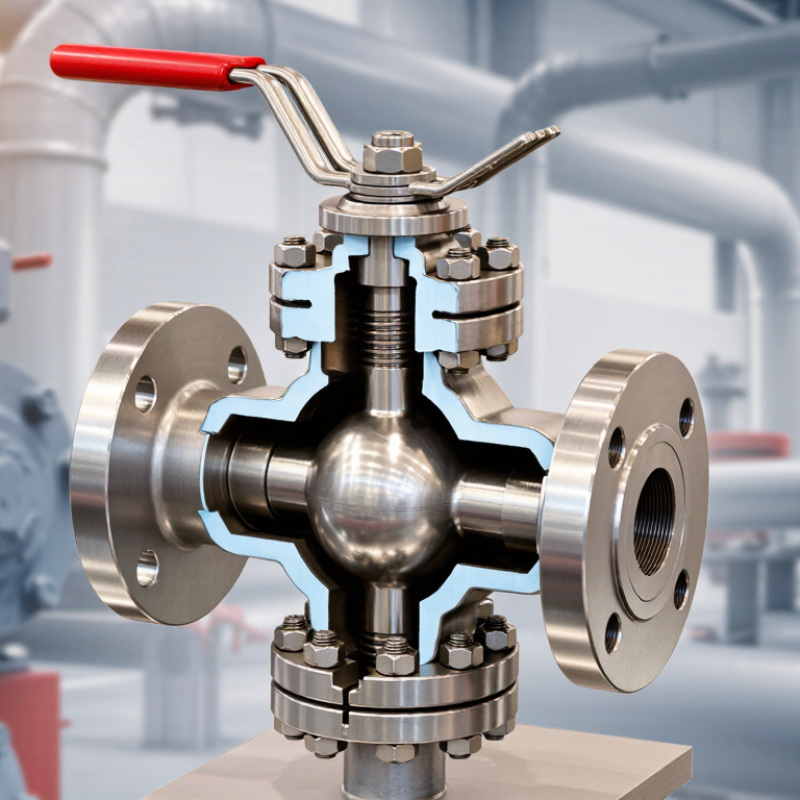
A three-way ball valve controls fluid flow through three connected ports. Its internal ball has a carefully shaped passage. When the handle turns, the passage aligns with different ports. This action can divert, mix, or isolate flow within a piping system.
There are two common flow patterns: L-port and T-port. An L-port design sends fluid between two selected ports. A T-port design can connect several ports at once. The correct choice depends on pressure, temperature, media, and the required flow direction. For example, a heating system may use one valve to direct water toward different circuits. A process line may use it to combine two streams.
Tips: Check the valve diagram before installation. Confirm the port labels, sealing material, and actuator position. Never assume every three-way valve provides the same switching pattern.
A three-way ball valve can reduce fittings and simplify compact piping layouts. It may also support faster manual control during maintenance. However, poor sizing can create turbulence, pressure loss, or weak flow control. In practice, selection is not always obvious. A valve that works well for clean water may perform poorly with abrasive or sticky media. Engineers should compare operating data with the manufacturer’s verified specifications. Installation direction matters too. A small mistake in the handle position can send fluid to the wrong branch. That detail deserves more attention.
Why Choose a 3-Way Ball Valve? - What Is a Three-Way Ball Valve?
A three-way ball valve uses a drilled ball to direct, divert, or mix flow between three ports. An L-port design typically connects two ports at a time and is commonly used for flow selection. A T-port design can connect two ports or all three ports, making it suitable for diverting and mixing flow paths. The values show the number of ports connected in typical selectable positions, not pressure, flow rate, or valve performance.
How Does a Three-Way Ball Valve Work?
Why Choose a 3 Way Ball Valve?
How Does a Three-Way Ball Valve Work?
A three-way ball valve controls flow through three connected ports. Inside, a drilled ball rotates around a central stem. Turning the handle usually rotates the ball 90 degrees. The bore then aligns with different ports, directing liquid or gas along a selected route.
An L-port design commonly diverts flow between two outlets. A T-port design can connect several paths, mix streams, or distribute flow. The exact function depends on the internal bore and handle position. During field inspections, I check the valve diagram before installation. Handle markings alone can be misleading.
The seats press against the ball to reduce leakage during operation. Stem seals protect the outside from escaping media. However, pressure, temperature, and fluid compatibility still matter. A valve rated for water may not suit hot oil or corrosive chemicals. Clean, filtered media can also reduce wear on the seats.
The design is practical.
A small installation mistake can create unexpected flow. For example, reversing the valve may send pressure toward a closed branch. Some T-port valves cannot fully isolate every port. This detail is easy to overlook. For reliable service, confirm the port pattern, pressure rating, seal material, and permitted switching conditions. Periodic checks should look for stiff movement, external leakage, and damaged handle indicators. Even a well-selected valve needs correct operation.
What Are the Main Port and Flow Configurations?
Why Choose a 3 Way Ball Valve?
A three-way ball valve uses one common port and two branch ports. The port arrangement determines its real function. An L-port ball usually connects the common port to either branch. A quarter-turn actuator changes the direction quickly. This suits simple diversion between two pipelines.
A T-port ball offers more flow possibilities. Depending on the ball design, it can connect all three ports, connect two selected ports, or isolate one branch. However, not every T-port supports every pattern. Check the manufacturer’s flow diagram. It is easy to assume too much. In mixing service, two inlet streams may enter one outlet. In diverting service, one inlet may feed either outlet. Some systems also use X-port designs, but they require careful engineering review.
Port labels matter. A common port is not always the inlet. Operators should verify pressure direction, actuator position, and fail-safe behavior. During field inspections, unclear labels often create avoidable commissioning delays. The 2024 Industrial Valves Market report by MarketsandMarkets projects growth from about USD 78.2 billion in 2024 to USD 97.8 billion by 2029. This expansion reflects wider use across process industries, where accurate flow control remains essential. Yet market growth does not replace sizing discipline. Engineers still need to compare bore diameter, pressure drop, temperature, and sealing requirements. A compact valve can look efficient, but its internal passage may restrict flow more than expected.
What Benefits Does a Three-Way Ball Valve Offer?
A three-way ball valve offers practical control when one pipeline must serve multiple routes. Its three ports can divert, mix, or isolate fluid with a quarter-turn movement. An L-port design usually connects one inlet to either outlet. A T-port design can connect several ports, depending on its internal position. This flexibility can simplify piping layouts and reduce the number of separate valves required.
In a compact process line, operators can redirect water from a supply pipe to a storage tank or cleaning loop. That can save space and shorten response time during routine operation. The valve also supports clear, repeatable control when paired with a suitable actuator. However, flow paths are not always obvious from the handle position. Small labels and a visible flow diagram matter. They prevent costly mistakes.
Practical selection requires more than checking port size. Engineers should confirm pressure ratings, temperature limits, fluid compatibility, and the required flow pattern. They should also consider pressure drop and access for maintenance. A stuck actuator can interrupt the entire process. It is not a universal fix. In field inspections, incorrect installation remains a common weakness, especially when piping direction is assumed rather than verified. A well-selected valve performs reliably, but only when installation details and operating limits receive equal attention.
How Should You Select the Right Three-Way Ball Valve?
Selecting a three-way ball valve begins with the flow task, not the pipe diameter alone. Decide whether the valve must mix two streams, divert one stream, or isolate equipment. A T-port supports several flow routes, while an L-port usually connects one inlet to either outlet. Check the required switching positions carefully. An incorrect port pattern can send fluid toward a sensitive instrument. Draw the flow paths before ordering.
Match the valve body and trim to the medium, pressure, and operating temperature. Stainless steel may suit corrosive fluids, but compatibility depends on concentration and temperature. Seal selection matters just as much. PTFE can perform well in many services, while elastomers may offer better resilience elsewhere. Confirm pressure ratings at the actual temperature, not only at room conditions. Then compare the required flow coefficient, or Cv, with the pump and pipe capacity. An oversized valve can control poorly near a low-flow setpoint.
Consider manual access, actuator torque, cycling frequency, and the consequences of power loss. For automated systems, verify feedback signals and the requested fail position. Threaded, flanged, and sanitary connections require different installation practices. Leave room for inspection and seal replacement. A common field oversight is omitting cleaning requirements. That small omission can create avoidable maintenance work. Ask for test certificates, pressure testing records, and clear installation instructions. Independent standards strengthen confidence, but documentation should match the exact valve configuration.
Related Posts
-
Mastering the Basics of 3 Way Ball Valve Installation and Maintenance Guide
-
Understanding the Importance of Flow Control Valves in Modern Engineering Systems
-
How to Choose the Right Pneumatic Control Valve for Your Industrial Needs
-
What Makes the Best PVC Ball Valve Ideal for Your Business Needs
-
2026 How to Choose an Electric Actuated Ball Valve?
-
What is a 3 Way Ball Valve and How Does It Work?