
Why Choose Stainless Steel Sewer Grate for Global Projects?
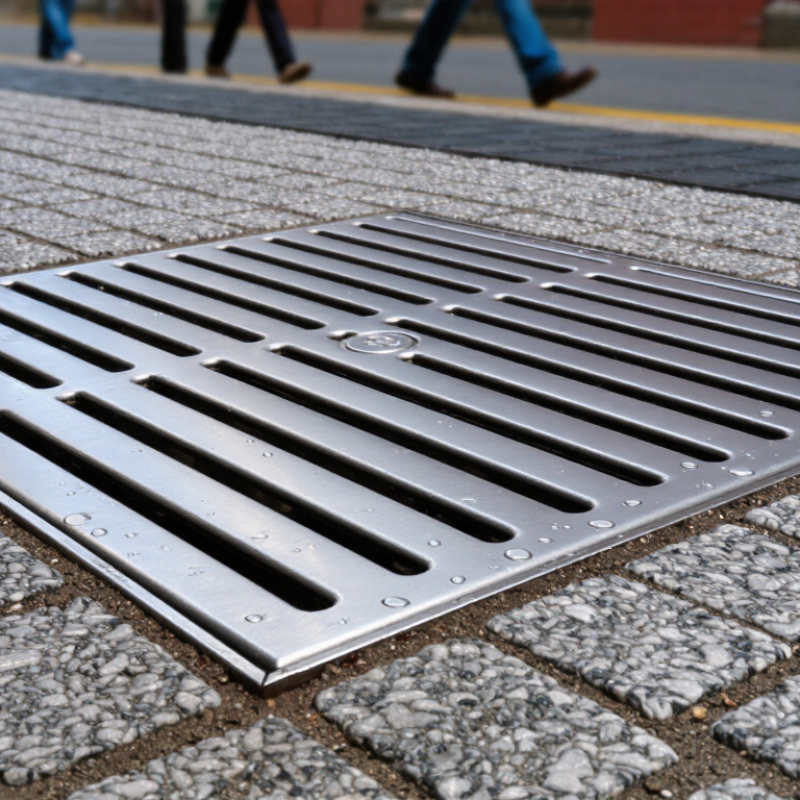
Choosing the right drainage component can shape a project’s safety, durability, and maintenance costs. A stainless steel Sewer Grate offers a practical solution for roads, industrial facilities, public spaces, and coastal developments. Its corrosion resistance helps it withstand rainwater, cleaning chemicals, salt spray, and daily traffic. That matters where replacement work is expensive or disruptive.
Project engineers usually examine more than appearance. They review load capacity, drainage flow, opening size, slip resistance, and installation conditions. Stainless steel can provide a clean, professional finish while supporting demanding environments. Grades such as 304 and 316 may suit different exposure levels, but material selection must match the site. Coastal locations often require stronger corrosion protection. Local specifications still matter.
Small details affect long-term performance. A grate should sit firmly in its frame. Edges should align with surrounding paving. Drain openings must manage water without creating hazards for pedestrians, bicycles, or maintenance vehicles. Practical testing and clear documentation improve confidence. Reliable suppliers should provide material information, dimensional drawings, surface options, and quality records.
It is not a perfect choice for every project. Stainless steel may cost more than galvanized alternatives. Poor installation can also reduce its service life. These limitations deserve honest consideration. However, when hygiene, appearance, strength, and corrosion resistance are important, a stainless steel Sewer Grate can offer balanced value. Careful design makes the difference.
Material Basics: Stainless Steel Requires at Least 10.5% Chromium (EN 10088)
Stainless steel sewer grates suit global infrastructure because their corrosion resistance begins with the material itself. Under EN 10088, stainless steel contains at least 10.5% chromium by mass. This chromium forms a thin passive film when exposed to oxygen. The film helps protect the surface from moisture, salts, and routine wastewater conditions.
Material selection still requires care. A grate near coastal roads may face chloride-rich spray, while an urban drain may collect oils, grit, and cleaning chemicals. Chromium provides the essential protection, but nickel, molybdenum, carbon, and the steel’s structure also influence performance. In practical inspections, smooth surfaces and clean drainage paths often matter as much as the alloy grade. Small debris can hold moisture against the metal. That detail is easy to miss.
Not every stainless grade fits every project. It is not a magic shield. Engineers should review water chemistry, traffic loading, temperature, fabrication quality, and maintenance access before approval. Welding can also affect corrosion resistance if heat-affected areas are poorly managed. I have seen specifications focus heavily on chromium content, then overlook drainage design and surface contamination. That approach needs reconsideration. Reliable procurement should request material certificates, applicable EN 10088 designation, load data, and inspection records. These documents support traceability across countries, where climate and construction practices may differ significantly.
Grade Selection: 304 Versus 316 with 2–3% Molybdenum for Chlorides
Why Choose Stainless Steel Sewer Grate for Global Projects?
Grade selection becomes critical when chloride exposure is expected. Stainless steel 304 usually contains about 18% chromium and 8% nickel. It performs well in many inland drainage systems. However, salt spray, deicing chemicals, and stagnant water can create aggressive conditions. Stainless steel 316 typically contains 2–3% molybdenum. That addition improves resistance to chloride-induced pitting and crevice corrosion.
The Nickel Institute’s technical data explains that molybdenum strongly increases pitting resistance. Engineers often compare grades using PREN: chromium percentage plus 3.3 times molybdenum percentage, plus 16 times nitrogen percentage.
This formula is useful, but it is not a site guarantee. ASTM G48 testing can compare pitting performance under controlled ferric chloride conditions. Field results still depend on temperature, deposits, weld quality, and drainage design.
In coastal parking decks, I have seen salt collect beneath grate frames. That hidden moisture matters. A 304 grate may appear sound while corrosion begins inside a narrow crevice. The NACE IMPACT study estimated global corrosion costs near 3.4% of global gross domestic product. Material choice deserves serious attention.
Yet 316 is not automatically correct everywhere. It costs more, and poor fabrication can weaken its advantage. I would inspect chloride concentration, cleaning practices, water stagnation, and weld finishing before approving the grade. Sometimes project teams over-specify. Sometimes they under-test. That is where better engineering judgment is still needed.
Load Safety: EN 124 Classes Rate Sewer Grates from 15 to 900 kN
Why Choose Stainless Steel Sewer Grate for Global Projects?
Load safety comes first. EN 124 classifies sewer grates by tested load capacity, from A15 at 15 kN to F900 at 900 kN. These ratings help engineers match a grate with its real installation environment. A15 suits pedestrian areas and landscaped spaces. B125 may fit parking zones. C250 often serves road edges, while D400 is designed for carriageways. E600 and F900 address heavy industrial and airport loading conditions.
The rating is not a decoration. It reflects controlled testing, including load application and structural performance. However, a class alone cannot guarantee safe service. Frame support, concrete quality, installation depth, drainage design, and traffic movement also matter. I have seen strong grates perform poorly because surrounding concrete was weak or uneven. Details decide performance.
Stainless steel adds practical value in wet, salty, or chemically exposed locations. Its corrosion resistance can help preserve the grate’s section and opening geometry over time. Still, material selection needs care. Stainless grade, surface finish, weld quality, and contact with dissimilar metals should be reviewed. Designers sometimes choose F900 automatically, assuming the highest class is always better. That approach may increase cost without solving the actual risk. A careful project review should consider wheel loads, impact, maintenance vehicles, drainage flow, and local installation practice. EN 124 provides a reliable reference, but field conditions remain imperfect.
EN 124 load classes define the minimum test load for sewer grates and access covers. Higher classes are intended for areas exposed to greater traffic and loading conditions, from pedestrian zones to airports and other locations subject to exceptionally high loads.
Global Compliance: Align Designs with EN 124, ASTM A240, and Local Codes
For global drainage projects, stainless steel sewer grates must satisfy more than appearance requirements. Compliance begins with the installation location and expected traffic load. EN 124 classifies access covers and gratings by load categories, from pedestrian areas to heavy industrial roads. A grate beside a warehouse entrance needs different verification than one in a public walkway. Fit matters.
Material documentation is equally important. ASTM A240 defines requirements for stainless steel plate, sheet, and strip, including chemical composition and mechanical properties. It does not replace grate design calculations or EN 124 testing. Project engineers should confirm the selected grade, thickness, welding method, and surface finish through traceable mill certificates. Small details can affect corrosion resistance. Heat-affected weld zones deserve careful inspection.
Local codes may add drainage capacity, accessibility, slip resistance, or installation rules. These requirements can vary between municipalities, even within one country. A reliable specification should list the governing standards, load class, clear opening, frame dimensions, and test evidence. Field checks should confirm that the frame sits level and that surrounding concrete supports it continuously. Do not guess. In practice, drawings sometimes follow EN 124 while procurement follows a different local detail. That mismatch can delay approval. Early coordination is safer, although it may feel slower at the design stage. Clear records, competent testing, and honest review support dependable performance across borders.
Why Choose Stainless Steel Sewer Grate for Global Projects? - Global Compliance: Align Designs with EN 124, ASTM A240, and Local Codes
| Compliance or Design Dimension | Reference Standard or Code Basis | Realistic Data or Requirement | Application for Stainless Steel Sewer Grates |
|---|---|---|---|
| Load classification | EN 124-1 and applicable product requirements | A15: 15 kN; B125: 125 kN; C250: 250 kN; D400: 400 kN; E600: 600 kN; F900: 900 kN test load | Select the class according to the actual traffic and pedestrian environment, not only by grate material. |
| Typical location by EN 124 class | EN 124 application zones | A15: pedestrian and cycle areas; B125: footways and car parks; C250: kerbside channels; D400: carriageways and hard shoulders; E600/F900: higher-load industrial or aircraft areas | The specified class should match the installation zone and the local authority's road hierarchy. |
| Material specification | ASTM A240/A240M | Covers chromium and chromium-nickel stainless steel plate, sheet, and strip for pressure-vessel and general applications; it does not by itself certify grate load capacity. | Use ASTM A240/A240M to define the stainless steel material, then verify structural performance under the required grate standard. |
| Common stainless steel grade: Type 304 | ASTM A240 Type 304 / EN 10088-2 equivalent family | Typical ASTM chemical limits include chromium 18.0–20.0% and nickel 8.0–10.5%; exact limits depend on the applicable edition and product specification. | Suitable for many urban, indoor, and moderately corrosive drainage environments when fabrication and maintenance are properly controlled. |
| Common stainless steel grade: Type 316/316L | ASTM A240 Type 316/316L / EN 10088-2 equivalent family | Typical ASTM limits include chromium 16.0–18.0%, nickel 10.0–14.0%, and molybdenum 2.0–3.0%; Type 316L has a maximum carbon limit of 0.030%. | The molybdenum-bearing grade generally provides better resistance than Type 304 in chloride-bearing or marine-influenced drainage locations. |
| Corrosion environment | Project environmental assessment and local material rules | Consider chlorides, coastal exposure, de-icing salts, wastewater chemistry, cleaning chemicals, humidity, and crevice conditions. | Stainless steel reduces coating-maintenance requirements, but grade selection and fabrication quality remain essential. |
| Welded fabrication | Applicable welding procedure, inspection, and local structural requirements | Weld heat tint and iron contamination can reduce corrosion resistance; post-weld cleaning, pickling, passivation, or an approved equivalent treatment may be required. | Specify fabrication controls and inspection records instead of relying solely on the stainless steel grade designation. |
| Slip resistance | Local accessibility, pedestrian-safety, and workplace-safety regulations | A smooth polished surface is not automatically slip resistant, especially when wet; the required wet-slip test method depends on the jurisdiction. | Use a textured, serrated, or otherwise tested walking surface where the grate is located in pedestrian traffic areas. |
| Hydraulic opening area | Drainage authority requirements and project hydraulic calculations | There is no single universal open-area percentage for all sewer grates; required flow capacity depends on rainfall intensity, catchment area, slope, inlet geometry, and blockage allowance. | Document clear opening area, bar spacing, head loss, and debris-blockage assumptions for each project. |
| Bar and slot safety | Local accessibility and pedestrian-safety codes | Requirements for slot width, orientation, heel and wheelchair safety, and small-object retention vary by jurisdiction and installation type. | Confirm local dimensional limits before finalizing slot geometry; do not use a generic opening size for every market. |
| Dimensional tolerances and fit | EN 124 product requirements, project drawings, and local infrastructure specifications | Frame dimensions, seating, level adjustment, bearing surfaces, and anti-rocking details must be controlled within the approved design tolerances. | Accurate fit helps prevent noise, impact damage, ponding, and premature fatigue at the frame-to-grate interface. |
| Testing and documentation | Specified EN 124 test route, ASTM material certification, and local inspection requirements | Typical records include material certificates, heat or batch traceability, dimensional inspection, weld inspection, surface-treatment records, and load-test results. | A compliance dossier allows authorities and project consultants to verify both material identity and finished-product performance. |
| Local code coordination | National, state, municipal, road-authority, and utility-owner requirements | Local codes may add requirements for load class, dimensions, accessibility, corrosion protection, markings, installation, inspection, and maintenance. | Use EN 124 and ASTM A240 as design references only after confirming the mandatory code hierarchy for the target country. |
| Recommended specification format | Project technical specification and approved drawings | State grade, product form, nominal thickness, grate and frame dimensions, load class, open area, slip resistance, finish, weld treatment, fixings, and test documentation. | A complete specification prevents the material standard from being mistaken for a complete performance or regulatory approval. |
Note: Final compliance must be verified against the current editions of the referenced standards and the mandatory local codes applicable to the installation site.
Lifecycle Value: Evaluate 100% Recyclability and Whole-Life Cost (ISSF)
Why Choose Stainless Steel Sewer Grate for Global Projects?
Lifecycle Value: Evaluate 100% Recyclability and Whole-Life Cost (ISSF)
A stainless steel sewer grate should be judged beyond its purchase price. In busy streets, loading zones, and coastal drainage channels, it faces water, grit, salts, and repeated traffic. Field inspections often show that corrosion resistance reduces replacement work and protects drainage performance. Less disruption matters.
The International Stainless Steel Forum (ISSF) identifies stainless steel as 100% recyclable. This means the material can return to production at the end of its service life, without losing its essential properties. However, recyclable does not mean every grate will be recycled. Collection systems, demolition practices, and local scrap markets still influence the result. The calculation is not always neat.
Whole-life cost includes fabrication, transport, installation, cleaning, repairs, replacement, and disposal. A durable grate may cost more initially, but fewer closures and fewer replacement parts can improve long-term value. For example, a grate beside a salted road may need less frequent intervention than a lower-cost alternative with weaker corrosion resistance. Material grade, drainage design, and maintenance conditions must still match the site.
That detail is easy to miss. A poorly fitted grate can create noise, movement, or trapped debris, regardless of material. Project teams should record expected traffic, exposure, maintenance access, and end-of-life recovery before approval. This approach supports reliable decisions, not optimistic claims.