
China Top Walkie Pallet Jack Manufacturers?

Choosing among China’s top Walkie Pallet Jack manufacturers takes more than comparing prices. Buyers need to check load capacity, travel distance, battery performance, service support, and parts availability. A compact electric jack may suit a busy shop floor, while a distribution center may need stronger construction and longer operating time. Details matter. So does the supplier’s ability to explain them clearly.

The expert voice below is illustrative, not a verified quotation from a real industry professional. “A Walkie Pallet Jack should match the work, not just the specification sheet,” says Jordan Lee, a fictional materials-handling specialist created for this introduction. It is a simple reminder. Ask how the equipment performs on your actual routes, with your usual loads, and across a full shift. Request clear information on battery options, charging, warranty coverage, and local technical assistance. Then compare answers, not just brochures.

This guide introduces manufacturers based in China and the practical factors buyers can use to assess them. It looks at product range, customization, quality-control information, export experience, and after-sales support. No single supplier fits every warehouse. A low purchase price can also hide a poor service fit, though that is easy to overlook. Treat supplier claims as a starting point; confirm important details directly and, where possible, inspect a sample unit or arrange a product demonstration.
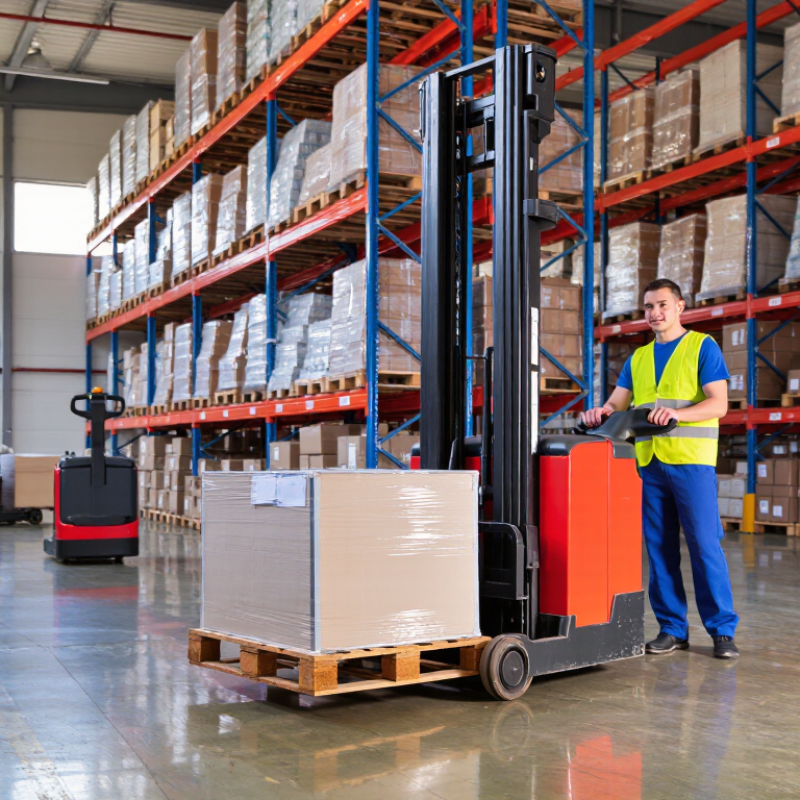
China Top Walkie Pallet Jack Manufacturers?

What Is a Walkie Pallet Jack and How Does It Work?

What Is a Walkie Pallet Jack and How Does It Work?

A walkie pallet jack is a powered material-handling truck that an operator steers while walking behind it. Its forks slide beneath a pallet, then an electric motor drives the unit and powers the lifting system. A tiller handle usually controls travel, steering, lifting, and lowering. The operator guides the load at walking speed rather than riding on the machine. That matters. It can make short warehouse moves less tiring, especially when loads are heavy or routes repeat.

To use one, check that the pallet is stable and within the jack’s rated capacity. Position the forks fully beneath the pallet, lift it just clear of the floor, and steer along a clear route. At the destination, lower the forks before pulling them out. Braking distance, floor condition, and turning space all affect control. A smooth concrete aisle feels very different from a cracked loading area. It is easy to focus on lifting height and overlook turning room.

Tips: Keep feet clear of the wheels, travel slowly around corners, and avoid carrying an unstable load. Check the battery, controls, and forks before use. Small details count. If the jack hesitates or the load tilts, stop and inspect rather than forcing the move.

China’s Walkie Pallet Jack Manufacturing Landscape

China’s Walkie Pallet Jack Manufacturing Landscape

China’s walkie pallet jack sector sits within a much larger industrial truck industry. The China Industrial Truck Association reported 1,172,625 industrial truck sales in 2023. That figure covers multiple truck types, not walkie pallet jacks alone. It signals manufacturing scale, but should not be read as a pallet-jack market total.

Production commonly combines welded steel forks, hydraulic pump units, drive motors, batteries, and electronic controllers. A buyer comparing factories should check rated capacity, fork dimensions, turning radius, and performance on uneven floors. Ask for load-test records and battery-cycle details, not just catalogue specifications. Small design differences matter.

The supply base serves both domestic distribution centers and export customers, with options ranging from basic manual-lift models to powered travel and lift systems. China’s broad industrial supply network can support varied configurations and component sourcing. Yet supplier capability is uneven. A polished product sheet proves little by itself. Request inspection records and sample-unit testing; even then, field performance may differ. The association’s aggregate figures offer useful context, not verification of any individual factory.

Leading Walkie Pallet Jack Manufacturers in China

China’s walkie pallet jack manufacturers serve warehouses, workshops, and distribution centers with different operating needs. A useful supplier is not simply one with a broad catalogue. Its team should explain load capacity, fork dimensions, turning radius, and battery options in plain language. Those details affect whether a jack can move safely through a narrow aisle or fit beneath a specific pallet.

When comparing manufacturers, ask how they test steering, braking, and lifting under load. Request clear specifications, inspection records, and details about spare-part availability. If possible, review a sample unit or arrange a factory assessment. Look closely at weld consistency, wheel materials, handle controls, and the finish around exposed metal. Small details matter. A polished brochure cannot confirm how a machine behaves on a cracked floor after months of daily use.

Communication is part of product quality, too. A reliable manufacturer should flag limits rather than promise that one model suits every site. Clarify production lead times, customization boundaries, and service response expectations before placing an order. There is no perfect checklist; buyers can still overlook a practical issue, such as ramp gradients or operator training. Ask specific questions, and record the answers in writing.

Product Types, Features, and Technical Specifications

Walkie pallet jacks from Chinese manufacturers generally come in manual, semi-electric, and fully electric types. Manual models rely on a hydraulic pump and suit short trips or light daily use. Semi-electric units power travel but use manual lifting, while electric models drive and lift with battery power. Some facilities also choose compact models for narrow aisles. The right type depends on load frequency, floor condition, and travel distance.

Check rated capacity, fork dimensions, lift height, battery, and turning radius before comparing machines. Common rated capacities range from 1.5 to 2.5 tonnes, but confirm the rating for the exact configuration. Fork lengths near 1,150 or 1,220 millimetres are common; widths and options vary. Typical lift height is around 200 millimetres. Lithium batteries can charge quickly, while lead-acid batteries may require more maintenance space. Specs alone can mislead. A small wheel or tight turn can matter more than a high capacity rating.

Tips: Ask for a specification sheet, load chart, and battery details. Test the jack with your actual pallet size and aisle width. Check braking, controls, and emergency stop response. I would not choose by price alone; site conditions are easy to underestimate.

How to Evaluate and Select a Chinese Manufacturer

China Top Walkie Pallet Jack Manufacturers?

How to Evaluate and Select a Chinese Manufacturer

Selecting a Chinese walkie pallet jack manufacturer takes more than comparing quotations. Ask for rated-capacity test records, wiring diagrams, battery specifications, and spare-parts lead times. Request a sample unit or arrange a live inspection. Watch it lift a loaded pallet, turn in a narrow aisle, and stop on a smooth floor. Small details matter. Check weld consistency, fork alignment, and whether the emergency-stop control is easy to reach. A polished catalog proves little.

MHI’s 2024 Annual Industry Report found that 55% of surveyed supply-chain professionals planned to increase technology investments. That trend makes controller diagnostics and clear maintenance records worth checking, even on basic equipment. Ask how the factory traces components and handles defects across production batches. Review its quality-management documentation, but do not treat certification alone as proof of reliable performance. Compare test methods and results against the same load and operating conditions. Check whether the quoted warranty covers labor, parts, and battery capacity. I would still want to see real service records; paperwork can look tidy while field support remains slow. A short video call with the production and service teams may reveal more than another brochure.

China Top Walkie Pallet Jack Manufacturers? - How to Evaluate and Select a Chinese Manufacturer
Evaluation Dimension Weight What to Verify Strong Evidence Score (1–5) Weighted Score
Product and application fit 15% Confirm the truck type, rated load, fork dimensions, minimum fork height, lift height, turning space, and intended floor conditions match the operation. A model-specific specification sheet and a written confirmation against your load, pallet, aisle, and operating requirements. — Score × 15%
Rated capacity and operating performance 10% Check rated capacity, load center, travel speed, gradeability, lifting performance, and operating time under stated test conditions. Technical data with test conditions clearly stated; performance claims can be checked on a sample unit. — Score × 10%
Safety and control features 12% Inspect the braking system, emergency reverse or belly-button function, tiller controls, horn, key or access control, and protection against unintended operation. Safety-feature list, operating manual, risk-related documentation, and a live demonstration of the controls. — Score × 12%
Product testing and sample inspection 10% Evaluate the sample’s lifting, lowering, driving, braking, steering, noise, and finish. Confirm that the delivered configuration matches the approved sample. Documented inspection and functional-test records for the relevant model, plus an agreed pre-shipment inspection plan. — Score × 10%
Quality management and production control 10% Review incoming-part checks, assembly inspections, nonconformity handling, corrective actions, and batch traceability. Auditable quality procedures and records. If ISO 9001 is claimed, verify the certificate’s scope, issuer, and validity; it is a quality-management-system certification, not a product approval. — Score × 10%
Market-specific compliance documentation 10% Identify the destination market and applicable requirements before ordering. Check that documents cover the exact truck model and configuration. For applicable EU sales, request the relevant Declaration of Conformity and supporting technical documentation. Verify the applicable requirements for your destination rather than relying on a generic certificate. — Score × 10%
Battery and charger suitability 8% Confirm battery chemistry, capacity, charging time, expected duty-cycle fit, charger input voltage, connector, and replacement availability. Battery and charger specifications matched to the truck and destination power supply. For lithium batteries shipped internationally, request the applicable UN 38.3 test documentation. — Score × 8%
Spare parts and service support 7% Check parts availability, parts identification, troubleshooting support, warranty coverage, and the process for handling service claims. Written warranty terms, illustrated parts list, service contact details, and a clear process for ordering replacement parts. — Score × 7%
Manufacturing capability and traceability 7% Assess whether the supplier can control the specified configuration, manage production scheduling, and identify the units and key components in each shipment. Factory audit or live production review, a documented production plan, and unit or batch identification records. — Score × 7%
Customization and configuration control 5% Clarify available options such as fork dimensions, battery, controls, labels, and packaging, including how changes are approved. A written configuration sheet and approved drawings or specifications for any non-standard options. — Score × 5%
Export packaging and delivery terms 6% Confirm packaging protection, shipment configuration, agreed Incoterms, lead-time assumptions, and responsibility for export and destination documents. Written quotation and packing details that match the order, with clear delivery responsibilities and shipment documentation requirements. — Score × 6%
Total 100% Score each dimension from 1 (weak or unverified) to 5 (strong, documented, and verified). Weighted total = sum of each score multiplied by its weight.