Top 10 Electric Valve Types for Your Next Project?

In the ever-evolving landscape of automation, electric valves have emerged as crucial components in various industries. Renowned expert, Dr. Amelia Hart, a leading engineer in fluid control systems, emphasizes, "The right electric valve can transform project efficiency and operational safety." As projects become more complex, understanding the different types of electric valves is essential for engineers and project managers alike.

Electric valves offer distinct advantages. They enable precise control, improve response times, and enhance safety protocols in fluid management systems. For instance, consider how a motor-operated valve can swiftly adjust flow rates, responding instantly to system needs. However, many professionals overlook the importance of selecting the appropriate type of electric valve, often resulting in inefficiencies.

There is a range of electric valve types, each with unique features suited for specific applications. Yet, not every valve fits every project. Missteps in selection may lead to performance issues or increased costs. Engineers must weigh factors such as pressure ratings, material compatibility, and environmental conditions carefully. This can be daunting, but understanding the nuances of electric valves can empower teams to make informed choices.
Top 10 Electric Valve Types for Your Next Project?

Overview of Electric Valve Types and Their Applications

Electric valves play a critical role in various industries, offering control over fluid flow. There are several types, each designed for specific applications. According to industry reports, the demand for electric valves is projected to grow by over 5% annually. This is driven by their efficiency and the increasing automation in sectors like water treatment and chemical processing.

Actuators are a central component of electric valves. They convert electrical energy into mechanical motion. This transformation allows for precise control. For instance, modulating electric valves can adjust flow rates seamlessly. In terms of materials, stainless steel is preferred for its durability and resistance to corrosion. However, this can also lead to increased costs, a factor that needs consideration in project budgeting.

Each valve type has unique advantages. Solenoid valves are compact and reliable for fluid shut-off applications. On the other hand, motor-operated valves are better suited for more extensive flow control systems. The choice often hinges on the specific requirements of a project. The complexity can be overwhelming, necessitating careful planning and expert consultation to ensure optimal selection.
Top 10 Electric Valve Types and Their Applications

Key Features to Consider When Choosing Electric Valves

When selecting electric valves for your project, several features warrant careful consideration. Start with the valve type. There are globe, ball, and butterfly valves, each suited to different applications. Understand their operational principles to ensure optimal functionality in your system.

Power supply is crucial too. Determine if your project requires AC or DC power. This choice impacts the valve's performance and compatibility with existing systems. Don’t overlook the valve size. Proper sizing is essential for flow regulation and pressure maintenance. An incorrectly sized valve can lead to inefficiencies and increased operational costs.

Tip: Always check the valve's response time. A fast response can enhance system performance, especially in critical applications. Remember to evaluate the materials used in valve construction. They should be compatible with the working environment to ensure longevity and reliability.

Finally, consider the controls. Whether you need manual overrides or electronic signals, choose valves that fit your automation needs. Don’t rush this process. Take time to research and weigh options. Each choice affects your project's success, making informed decisions key to effective system design.

Top 10 Electric Valve Types with Comprehensive Descriptions

Electric valves play a critical role in various industrial applications. They are essential for controlling flow in pipelines and systems. There are several types of electric valves, each designed for specific functions. The most common types are solenoid valves, motor-operated valves, and zone valves. These valves enhance system efficiency and improve automation.

According to a recent industry report, the global electric valve market is projected to grow at a compound annual growth rate (CAGR) of 6.2%. This growth is primarily driven by the increasing demand for smart automation and energy-efficient systems. Solenoid valves are particularly favored for their quick response. They are reliable for on-off operations in fluid control. Conversely, motor-operated valves provide better regulation for flow and pressure.

Choosing the right electric valve can be challenging. Each type has unique characteristics. For instance, while solenoid valves are compact, they may not handle high flow rates as well as motor-operated valves. Zone valves can provide significant savings in heating systems but may require careful sizing. Understanding these differences is crucial for optimal system performance.

Comparative Analysis of Electric Valve Performance and Efficiency

When choosing electric valves, performance and efficiency are crucial. Various types such as solenoid, motor-operated, and proportional valves each bring specific advantages. Solenoid valves respond quickly, often used for simple on-off applications. Motor-operated valves may offer more control over flow rates and pressure, making them ideal for complex systems. Understanding these differences can significantly impact your project's success.

**Tip 1:** Always consider the power requirements of the valves. Some require higher voltage, while others can operate on low voltage. Matching these with your system's capabilities is essential.

Efficiency varies across electric valve types. Proportional valves provide fine control, leading to energy savings in dynamic systems. However, they can be more complex, requiring careful setup. Know the trade-offs between control precision and simplicity. Simpler valves are easier to install but may lead to energy loss.

**Tip 2:** Evaluate your specific application needs before selection. Are precise adjustments crucial? Or is quick response sufficient? Analyze the fluid dynamics involved; this can guide your decision.

Remember, no valve is perfect for every scenario. Performance can be affected by installation errors, like misalignment and inadequate support. Always reflect on installation best practices to enhance reliability and efficiency. A well-planned approach will yield the best results in your next project.

Top 10 Electric Valve Types for Your Next Project

Valve Type Application Control Type Efficiency (%) Response Time (ms)
Solenoid Valve Fluid Control On/Off 90 20
Motorized Valve HVAC Systems Modulating 85 200
Globe Valve Flow Regulation Manual/Electric 80 300
Ball Valve Quick Shut-Off On/Off 95 30
Butterfly Valve Flow Control Modulating 82 150
Diaphragm Valve Corrosive Fluids On/Off 88 250
Check Valve Backflow Prevention Automatic 90 50
Pneumatic Valve Actuation Systems On/Off 87 60
Float Valve Water Level Control Automatic 80 300
Linear Actuator Valve Precision Control Modulating 84 120

Guidelines for Integrating Electric Valves into Your Project

Top 10 Electric Valve Types for Your Next Project?

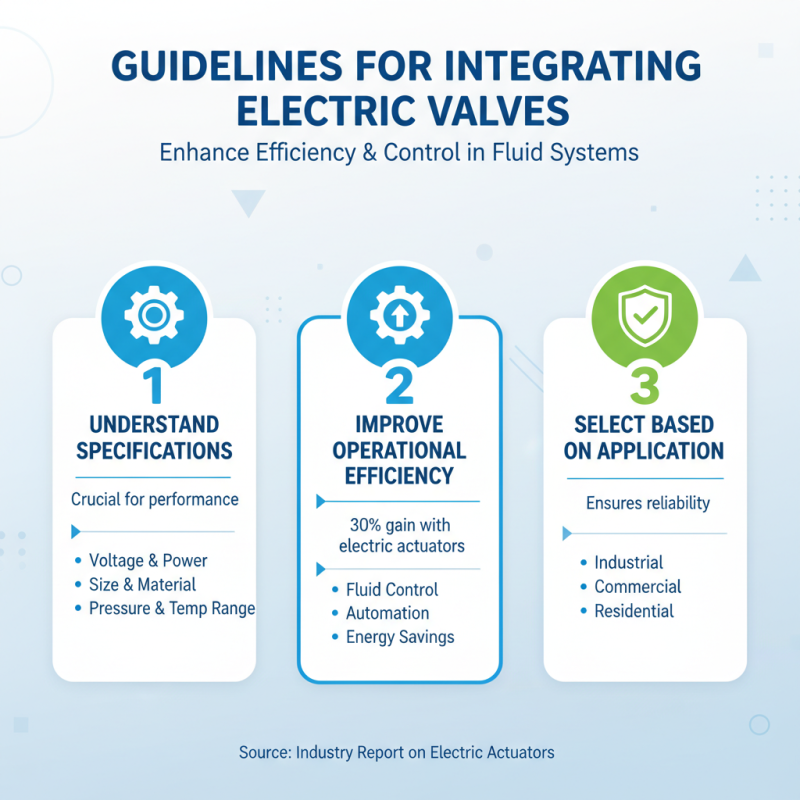
When integrating electric valves into your next project, understanding their specifications is crucial. Electric valves can enhance efficiency and control in fluid systems. A recent industry report suggests that the adoption of electric actuators in valve applications can improve operational efficiency by 30%. Proper selection based on application needs ensures reliability.

Consider the specifics of your project. Different environments require various valve types. For instance, stainless steel electric valves are suitable for corrosive environments. In contrast, PVC valves work well for less intensive applications.

Installing electric valves may seem straightforward, but installation issues can arise. Thorough testing is essential prior to full operation. Companies often encounter challenges in aligning controls and providing adequate power supply. Addressing these concerns early can save time and costs later on. It is important to learn from past project experiences to refine your integration process.