
What Are the Top Cold Room Types in 2026?
Cold rooms are no longer a single-purpose box behind a supermarket. They support food processing, pharmaceutical storage, restaurants, laboratories, and distribution hubs. The right design depends on what must stay cold, how often staff enter, and how goods move through the space. Small details matter: a frequently opened door can change operating conditions, while a poorly planned loading area can slow daily work.
The scale of demand is substantial. The Global Cold Chain Alliance’s 2020 Global Cold Storage Capacity Report estimated worldwide refrigerated warehouse capacity at 719 million cubic meters. FAO’s 2019 food-loss report estimated that 14% of food is lost between harvest and retail. These figures describe different parts of the supply chain, but they show why dependable temperature-controlled storage matters. They do not, by themselves, prove that one room type fits every business.
This guide compares the leading Cold Room types expected to matter in 2026, including walk-in rooms, modular units, blast chillers and freezers, large cold-storage warehouses, and specialist pharmaceutical rooms. It explains their typical uses, practical advantages, and design trade-offs. Temperature ranges and equipment needs vary by product and operating process, so readers should verify specifications with qualified refrigeration professionals. The categories are useful, but not perfect: some facilities combine several types in one building. That distinction matters. A room’s label alone cannot tell you whether it suits your workflow.
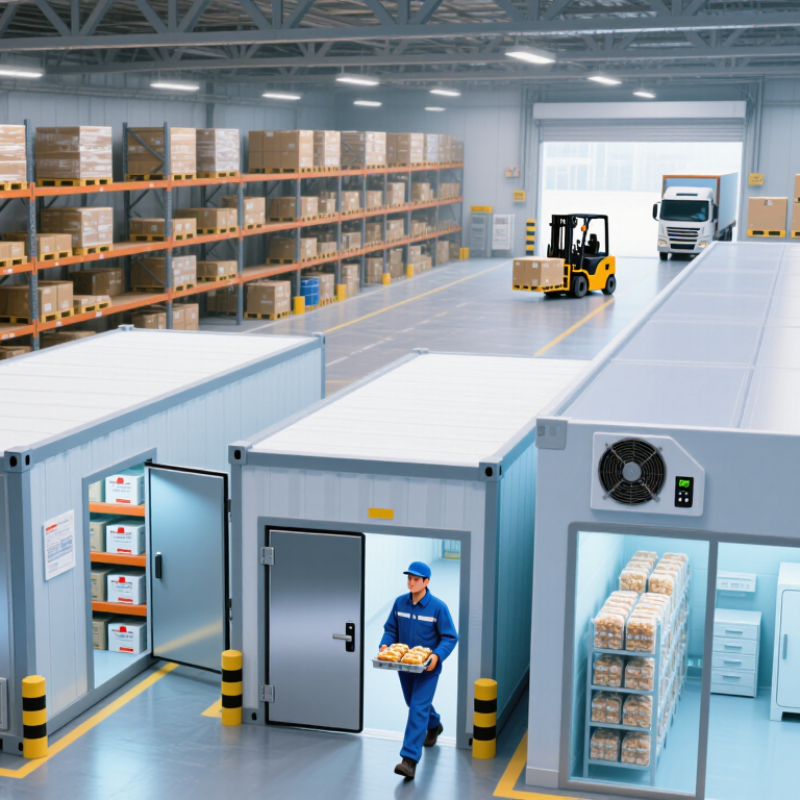
How Cold Rooms Are Classified by Temperature and Application
What Are the Top Cold Room Types in 2026?
Cold rooms are classified by temperature and the products they protect. Chilled rooms commonly operate between 0°C and 5°C for fresh produce, dairy, and prepared foods. Frozen rooms typically hold products at -18°C or colder, while blast-freezing rooms use much lower temperatures to freeze goods quickly. These are practical ranges, not universal specifications. Product requirements and operating conditions matter.
Application shapes the design, too. Pharmaceutical rooms often store products in the 2°C to 8°C range, but some medicines require different conditions and tighter monitoring. The FAO’s 2019 State of Food and Agriculture estimated that 14% of food is lost after harvest and before retail. Cold storage can help protect perishable goods, though poor loading or temperature control can undermine it. The GCCA’s 2020 Global Cold Storage Capacity Report estimated 719 million cubic metres of capacity worldwide—a useful snapshot, not a current inventory.
Tips: Match the room to the product, not just its label. Check temperatures at doors, corners, and loading areas; warm air can linger there. Small details matter. Setpoints alone do not prove that every shelf stays within range.
Walk-In Cooler Cold Rooms for Chilled Storage
What Are the Top Cold Room Types in 2026?
Walk-In Cooler Cold Rooms for Chilled Storage
Walk-in cooler cold rooms remain a practical choice for businesses that need chilled storage with easy access. They suit restaurants, food shops, and kitchens handling frequent deliveries. Staff can move crates directly onto shelves instead of squeezing supplies into several small refrigerators. Typical chilled-storage temperatures vary by product, so set the room according to the goods stored and check it with a reliable thermometer. A stable reading matters. So does airflow. Overpacked shelves can block circulation and leave warm spots near the door. That detail is easy to miss.
Tips: Keep a clear aisle and leave space around fans. Check door seals for gaps, especially after busy shifts. Record temperatures at consistent times, and investigate repeated fluctuations rather than adjusting the thermostat blindly. Simple habits help.
Before choosing a room, consider delivery volume, available floor space, and how often staff enter. Insulation, door size, shelving, and floor finish affect daily use as much as cooling capacity. A room that is too small may become crowded quickly; an oversized one can waste energy when used lightly. There is no perfect layout for every operation. Measure the largest carts and containers first, then plan access and cleaning space around them. Inspecting the finished room under normal working conditions can reveal awkward corners or slow-closing doors. Some issues only show up after a week of real use.
Walk-In Freezer Cold Rooms for Frozen Goods
What Are the Top Cold Room Types in 2026?
Walk-In Freezer Cold Rooms for Frozen Goods
Walk-in freezer cold rooms suit businesses handling cartons, palletized food, or seasonal stock. They provide room for staff and equipment, unlike compact reach-in units. A practical frozen-storage benchmark is -18°C or colder, as specified in the Codex Code of Practice for the Processing and Handling of Quick Frozen Foods. But the setpoint alone is not enough. Door openings, warm deliveries, and uneven airflow can create temperature swings near the entrance.
Good design starts with the actual load: daily product volume, incoming product temperature, and how often staff enter. Insulated panels, tight door seals, and correctly sized refrigeration help stabilize conditions. The International Institute of Refrigeration’s 2023 review estimates that refrigeration and air conditioning use about 20% of global electricity. That makes efficient fans, lighting, and defrost controls worth considering. Still, energy savings should not come at the cost of reliable product temperatures. It is easy to overlook busy loading periods.
Tips: Place a temperature sensor near the warmest likely area, not only beside the evaporator. Keep cartons clear of air outlets, and check door seals regularly. Record temperatures during real operating hours; an empty-room test can miss problems during deliveries. A simple log helps, though it will not replace equipment maintenance.
What Are the Top Cold Room Types in 2026? - Walk-In Freezer Cold Rooms for Frozen Goods
| Walk-In Freezer Type | Typical Operating Range | Best Suited For | Common Design Features | Key Planning Considerations |
|---|---|---|---|---|
| Standard Frozen-Storage Room | Approximately −18°C to −22°C | Packaged frozen food, meat, seafood, and other products already frozen before delivery. | Insulated walk-in enclosure, low-temperature refrigeration system, insulated floor where required, and a tight-sealing door. | Maintain the required product temperature during normal operation and loading. Frozen-food storage is commonly designed around −18°C or colder, subject to applicable local requirements. |
| Low-Temperature Room | Approximately −23°C to −30°C | Products requiring colder storage, including some ice cream and specialty frozen goods. | Higher-capacity refrigeration, carefully selected door and floor details, and insulation suited to the colder design condition. | Colder setpoints increase refrigeration demand and can affect equipment selection, defrost strategy, floor protection, and operating costs. |
| Blast-Freezing Room | Room air is often approximately −30°C to −40°C during the freezing cycle | Rapidly freezing chilled or partially frozen food before it is moved to frozen storage. | High-capacity refrigeration and strong, directed airflow across product loads; layouts are designed around trays, racks, or carts. | Air temperature alone does not confirm that food is frozen. Freezing time depends on product size, packaging, loading pattern, and airflow; verify product temperature as required. |
| High-Traffic Distribution Freezer | Typically around −18°C to −25°C, depending on the product and operation | Warehouses, food-service operations, and distribution areas with frequent picking and replenishment. | Robust doors, traffic-resistant finishes, suitable access widths, and refrigeration sized for frequent door openings. | Plan for peak traffic, loading patterns, and door-open time. Strip curtains or rapid-roll doors may help limit warm, moist air entry when suitable for the operation. |
| Multi-Compartment Freezer Room | Each compartment is independently set, commonly within approximately −18°C to −30°C | Sites storing different frozen-product categories or managing separate workflows. | Partitioned insulated spaces, separate access points where practical, and independently controlled refrigeration zones. | Separate zones can support different temperature needs, but partitions, doors, controls, and refrigeration capacity should be designed together to avoid uneven temperatures. |
| Compact Walk-In Freezer | Typically around −18°C to −22°C | Restaurants, small retailers, kitchens, and other operations with limited storage volume. | Modular insulated panels, a compact refrigeration system, and shelving arranged to preserve airflow. | Allow clearance around evaporator air paths, avoid overloading shelves, and check that the floor, door, and electrical supply suit the installation conditions. |
Planning note: Temperature ranges are typical design examples, not universal specifications. Final setpoints, insulation, refrigeration capacity, floor construction, and food-safety controls should be selected for the products, site conditions, loading pattern, and applicable local regulations.
Blast Chiller and Blast Freezer Rooms for Rapid Cooling
In 2026, blast chiller and blast freezer rooms remain essential where food must move quickly from production to storage. A blast chiller rapidly lowers the temperature of cooked products; a blast freezer takes them below freezing for longer storage. Their performance depends on more than room temperature. Product depth, tray spacing, airflow, and loading patterns all affect cooling time.
The FDA Food Code 2022 provides a useful safety benchmark: cool food from 135°F to 70°F within two hours, then to 41°F within six hours total. These limits are not equipment specifications, but they help operators check whether a chilling process performs as intended. Record product temperatures at the center of representative trays, not just the room’s display reading.
ASHRAE’s Handbook—Refrigeration discusses the role of airflow and heat transfer in refrigeration system design. In practice, tightly packed carts can block air and leave warm pockets between trays. Small details matter. A mapped temperature test under a full load can reveal uneven cooling before it becomes routine. Still, rapid chilling is not automatically consistent; product thickness and door openings can change results, so operating settings need regular review.
How to read this chart: These are representative food-temperature targets, not room-air setpoints. Blast chillers and blast freezers are designed to reach chilled or frozen targets rapidly; actual performance depends on the food, load, and equipment.
Pharmaceutical Cold Rooms for Temperature-Sensitive Products
What Are the Top Cold Room Types in 2026?
Pharmaceutical cold rooms are designed around the storage conditions of specific products, not a one-size-fits-all temperature. Chilled rooms may support products requiring refrigerated storage, while freezer rooms serve items that must remain frozen. Some facilities also need ultra-low-temperature storage for specialized materials. The product label and validated storage requirements should guide each room’s design.
Small details matter. Insulation, door seals, airflow, and shelving placement all affect temperature stability. A cold spot near an evaporator or a warm area beside a frequently opened door can create uneven conditions. Temperature mapping helps identify these areas before they affect stored inventory. Continuous monitoring, calibrated sensors, and clear alarms help staff respond when readings move outside approved limits. A clean dashboard can still hide a warm corner.
Reliable operation also depends on backup power, planned maintenance, and practical staff procedures. Keep products away from direct airflow, avoid blocking sensors, and record door openings when investigating temperature changes. Separate storage zones may help prevent incompatible products from sharing space. But more equipment is not always better; complex systems can be harder to maintain. The room should fit the product range, available floor space, and response capability of the site. Temperature checks need attention, even when the system appears stable.