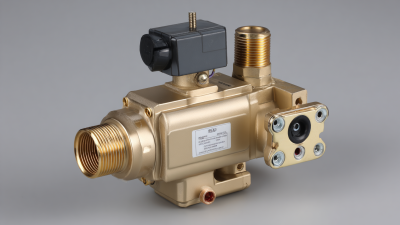
China Best Electric Valve Suppliers for Global Buyers
China has become a major sourcing base for industrial flow-control equipment. Its factories serve water treatment, HVAC, energy, chemical processing, and general automation projects. According to Fortune Business Insights, the global industrial valves market was valued at approximately USD 77.52 billion in 2023. The report expects continued growth through 2032, supported by infrastructure upgrades and process automation.
Demand is shifting toward smarter control. The International Energy Agency’s World Energy Investment 2024 report highlights rising investment in electricity systems and grid modernization. These projects require dependable electric valve solutions for accurate isolation, regulation, and remote operation. However, product selection cannot rely on price alone. Buyers should review actuator torque, operating cycles, IP protection, temperature limits, control signals, and manual override design. They should also request material certificates, pressure-test records, and relevant quality documentation.
Details matter.
Reliable Chinese suppliers usually provide clear drawings, traceable components, sample testing, and consistent after-sales support. Certifications such as ISO 9001 can support quality management, but certification alone does not prove field performance. Factory audits, witness testing, and reference projects provide stronger evidence. A low quotation may become expensive after premature actuator failure, incorrect voltage, or delayed spare parts. No supplier ranking is perfect. Product fit depends on the medium, pressure, installation environment, and control system. This guide compares China’s best electric valve suppliers through technical capability, manufacturing experience, customization strength, delivery reliability, and global buyer support. The goal is practical selection, not promotional praise.
What Electric Valves Are and How They Work
An electric valve combines a valve body with an electric actuator. The actuator uses a motor, gears, and limit switches to move the stem or disc. A controller sends a signal, often 24 VDC, 110 VAC, or 220 VAC. The valve then opens, closes, or adjusts flow gradually.
The mechanism is simple. The application is not.
Ball, butterfly, globe, and gate valves can all use electric actuation. On-off models stop flow at fixed positions. Modulating models respond to signals such as 4–20 mA. They help control water, air, steam, chemicals, and process fluids. Torque, pressure, temperature, duty cycle, and enclosure protection must match the site. A larger actuator is not always safer. It may damage the valve stem.
MarketsandMarkets estimated the global electric actuators market at about USD 1.5 billion in 2024, with continued growth through 2029. Grand View Research also reported steady expansion in the wider industrial valve market. These figures reflect rising automation, but they do not guarantee reliable field performance. Wiring errors remain common. Incorrect torque calculations cause avoidable failures. Spring-return or backup power may be necessary where safe positioning matters. A specification sheet can look complete and still miss moisture, vibration, or emergency operating conditions. 亚洲日韩
Key Types of Electric Valves for Industrial Applications
Electric ball valves are widely used for fast isolation in water, compressed air, and process lines. Their quarter-turn action supports quick opening and closing. In a plant inspection, technicians often check actuator torque, stem alignment, and cable sealing. A small misalignment can cause noisy operation or premature wear.
Electric butterfly valves suit large-diameter pipes because their compact bodies reduce weight and installation space. They work well in cooling water, ventilation, and chemical transfer systems. Electric globe valves provide finer flow regulation, making them suitable for steam, heating loops, and pressure control. However, they create more pressure loss than many quarter-turn designs. That trade-off is easy to overlook.
Electric gate valves are mainly selected for full-open or full-closed service. They should not regulate flow continuously, because partially open gates may vibrate and erode. For accurate automation, buyers should compare response time, actuator protection rating, manual override design, and position feedback. I have seen projects focus on valve size while ignoring power quality and ambient temperature. That mistake can delay commissioning. Valve materials also need careful review. Stainless steel may suit corrosive fluids, while ductile iron can fit less aggressive water systems. Control signals, emergency behavior, and maintenance access deserve equal attention. Sometimes, the most expensive specification is not the most reliable one.
| Electric Valve Type | Actuation Method | Typical Size Range | Typical Pressure Range | Typical Temperature Range | Flow Control Characteristics | Common Industrial Applications | Typical Materials | Relevant Design or Testing Standards |
|---|---|---|---|---|---|---|---|---|
| Electric Gate Valve | Multi-turn electric actuator with rising or non-rising stem | DN 50–1,200 Approx. NPS 2–48 |
PN 10–420 Class 150–2,500, depending on design |
Approximately −29°C to 593°C, depending on body, seat and packing materials | Primarily on/off isolation; not recommended for continuous throttling because partial opening can cause seat and disc erosion | Water transmission, power generation, steam systems, oil and gas pipelines, chemical processing and general process isolation | Carbon steel, stainless steel, alloy steel, ductile iron and resilient or metal seat materials | API 600, API 6D, ASME B16.34, ISO 5208 and ISO 5210 for multi-turn actuator interfaces |
| Electric Globe Valve | Linear electric actuator or multi-turn actuator with linear stem movement | DN 15–400 Approx. NPS ½–16 |
PN 16–420 Class 150–2,500, depending on construction |
Approximately −29°C to 593°C, subject to trim, gasket and packing selection | Good throttling and flow-regulation capability; higher pressure loss than a gate valve at equivalent size | Boiler feedwater, steam control, cooling-water regulation, refinery services and process flow adjustment | Carbon steel, stainless steel, alloy steel and hardened trim for erosive or high-pressure services | ASME B16.34, BS 1873, ISO 5208 and IEC 60534 principles for control-valve sizing where applicable |
| Electric Butterfly Valve | Quarter-turn electric actuator, normally with an ISO 5211 mounting interface | DN 50–2,400 Approx. NPS 2–96 |
PN 6–40 Class 150–600, depending on seat and body design |
Approximately −40°C to 200°C for many resilient-seat designs; metal-seat designs can reach higher temperatures | Fast quarter-turn isolation and economical modulation; suitable for large-diameter, low-to-medium pressure pipelines | HVAC, water treatment, cooling water, fire protection, mining slurry, air handling and low-pressure process systems | Ductile iron, carbon steel, stainless steel, EPDM, NBR, PTFE and metal seat materials | API 609, EN 593, ISO 5211, ISO 5208 and MSS SP-67 |
| Electric Ball Valve | Quarter-turn electric actuator with a floating or trunnion-mounted ball | DN 15–1,000 Approx. NPS ½–40 |
PN 10–420 Class 150–2,500, depending on bore and design |
Approximately −196°C to 550°C, depending on cryogenic, low-temperature or high-temperature construction | Low pressure drop with full-bore designs; rapid shutoff and reliable isolation; characterized balls may be used for modulation | Natural gas, petrochemical processing, cryogenic systems, water treatment, compressed air and utility services | Carbon steel, stainless steel, duplex stainless steel, PTFE, reinforced polymers and metal seats | API 608, API 6D, ISO 17292, ASME B16.34 and ISO 5208 |
| Electric Plug Valve | Quarter-turn electric actuator with lubricated, eccentric or sleeved plug design | DN 50–900 Approx. NPS 2–36 |
PN 10–420 Class 150–2,500, depending on design |
Approximately −29°C to 550°C, depending on body, sleeve and sealing materials | Positive on/off isolation with a relatively unobstructed flow path; torque requirements can increase with deposits or pressure | Gas processing, refinery services, abrasive media, wastewater, slurry handling and pipeline isolation | Carbon steel, stainless steel, alloy steel, PTFE-lined components and elastomer sleeves | API 599, API 6D, ASME B16.34 and ISO 5208 |
| Electric Diaphragm Valve | Electric linear actuator operating a flexible diaphragm | DN 15–300 Approx. NPS ½–12 |
PN 6–16 Commonly used in low-to-medium pressure systems |
Approximately −20°C to 150°C, depending on diaphragm and lining material | Suitable for isolation and moderate throttling; the diaphragm separates the actuator mechanism from the process fluid | Corrosive chemicals, ultrapure water, pharmaceutical processing, food processing and wastewater treatment | Cast iron, ductile iron, stainless steel, lined steel, PTFE, EPDM and other compatible diaphragm elastomers | EN 13397, ISO 5208 and applicable hygienic or chemical-service requirements |
| Electric Pinch Valve | Electric linear actuator compressing or releasing a flexible sleeve | DN 50–1,200 Approx. NPS 2–48 |
PN 6–16 Actual rating depends strongly on sleeve material and operating conditions |
Approximately −20°C to 100°C, depending on sleeve compound and medium | Full-bore flow path with strong resistance to abrasion and clogging; suitable for isolation and coarse flow control | Mining slurry, cement, ceramics, pulp and paper, wastewater, ash handling and abrasive bulk-fluid services | Cast iron, carbon steel, stainless steel and sleeves made from natural rubber, EPDM, NBR or specialty elastomers | Manufacturer design standards, ISO 5208 leakage testing where applicable, and project-specific abrasion or lining requirements |
| Electric Knife Gate Valve | Linear electric actuator or electric multi-turn actuator with rising stem | DN 50–1,600 Approx. NPS 2–64 |
Typically PN 6–16 Higher ratings are available for selected designs |
Approximately −20°C to 300°C, depending on packing, seat and body materials | Designed mainly for isolation in fluids containing solids; throttling should be limited to designs specifically rated for it | Pulp and paper, mining, wastewater, ash, biomass, bulk solids and abrasive slurry pipelines | Carbon steel, stainless steel, cast iron, duplex steel, stainless steel gate plates and resilient seats | MSS SP-81, TAPPI TIS 405, ISO 5208 and project-specific slurry-valve testing requirements |
| Selection note: The ranges shown are representative industrial values rather than universal limits. Final selection should verify medium compatibility, flow coefficient, pressure-temperature rating, shutoff class, actuator torque or thrust, duty cycle, ingress protection, power supply, hazardous-area requirements and applicable local regulations. | ||||||||
Essential Factors for Evaluating Global Valve Suppliers
Choosing among China’s electric valve suppliers requires more than comparing unit prices. The decisive question is whether a supplier controls performance from casting to final testing. Fortune Business Insights’ 2024 Global Industrial Valves Market report estimates the market at about USD 78 billion in 2023, with continued growth through 2032. That scale attracts capable factories and rushed imitators. Experience matters here.
Request material certificates, actuator torque curves, ingress-protection test results, and serial-level inspection records. Confirm testing against applicable ISO, IEC, and API requirements, not vague “international standards.” For electric valves, compare shutoff performance, cycle life, fail-safe behavior, and response under voltage variation. The IEA’s World Energy Investment 2024 report places global energy investment above USD 3 trillion, increasing demand for dependable flow-control equipment. Still, a large market does not guarantee reliable production. Ask to witness hydrostatic and functional tests. Take photographs.
Supplier audits should examine calibration dates, nonconformance handling, spare-part lead times, and engineering response. The 2024 Edelman Trust Barometer reports declining global trust in institutions, warning procurement teams against polished claims. Independent inspection can verify what brochures cannot. Check whether drawings match delivered dimensions, especially mounting interfaces and cable entries. A small mismatch can stop installation. I would also score communication during a technical dispute. It reveals more than a showroom visit. Price still matters, but treating it as the main filter is an avoidable weakness.
China’s Electric Valve Manufacturing Capabilities and Standards
China’s electric valve sector combines large-scale machining with increasingly formal process control. Grand View Research estimated the global industrial valves market at about USD 78.6 billion in 2023, with continued growth through 2030. Electric valves support water treatment, power generation, chemical processing, and building systems.
Standards shape production quality. Manufacturers commonly align valve bodies, actuators, and mounting dimensions with ISO 5211 and IEC 60534 requirements. Electrical safety and control interfaces may follow IEC 60204-1, while pressure testing often references ISO 5208. China’s GB/T standards frequently adopt or correspond with international requirements. In practical audits, buyers should request material certificates, pressure-test records, actuator torque curves, ingress-protection evidence, and serial-number traceability. Small details matter. A clear nameplate helps.
Factory capability is not only about equipment. CNC machining, automated welding, coordinate measurement, and digital inspection systems can improve repeatability. ISO 9001 certification provides a process framework, but it does not guarantee every shipment is perfect. That distinction is often overlooked. Reports from MarketsandMarkets and other valve-industry analysts indicate rising demand for remote monitoring and automated flow control, especially in municipal infrastructure and energy projects. Chinese suppliers are responding with modulating actuators, local control panels, and communication options such as Modbus. Yet field performance still depends on sizing, wiring, climate protection, and commissioning. A capable supplier should explain these limits clearly, not promise universal compatibility.
China’s Electric Valve Manufacturing Capabilities and Standards
Common nominal pressure classes used when specifying industrial valves for global projects
Chinese electric valve manufacturers commonly configure motorized valves according to nominal pressure, nominal size, valve construction, actuator torque or thrust, control mode, and applicable standards. The pressure classes shown are standard PN designations expressed in bar and are used for engineering selection; actual operating pressure depends on the valve type, temperature, materials, and project requirements. Relevant specifications may reference Chinese standards such as GB/T 12224 for industrial valve requirements, together with applicable ISO, IEC, API, or EN requirements for international projects.
How International Buyers Can Select and Purchase Reliable Suppliers
China Best Electric Valve Suppliers for Global Buyers
International buyers should judge suppliers by evidence, not polished catalogs. The IEA’s Energy Technology Perspectives 2024 estimates that clean-energy manufacturing markets could exceed 2 trillion dollars annually by 2035. This growth increases demand for dependable electric valves in water treatment, power, and process plants. Ask for material certificates, actuator specifications, wiring diagrams, and recent factory inspection records. Request samples with identical seals, housings, and control interfaces.
Check compliance before discussing price. A reliable supplier should explain valve testing against relevant IEC, ISO, or EN requirements. For automated assemblies, verify torque margins, ingress protection, fail-safe behavior, and cycle-test results. ISO 5211 documentation can confirm actuator-to-valve mounting compatibility. The supplier should also provide serial-number traceability from raw material to final inspection. Ask for a video of the factory acceptance test. Better still, arrange an independent inspection before shipment.
Small details expose weak systems. Compare response time at low voltage, not only rated voltage. Check whether replacement parts remain available for five years. The U.S. Department of Energy’s industrial efficiency studies repeatedly identify maintenance and control optimization as major energy-saving opportunities. A valve that sticks during commissioning can erase a low purchase price quickly. I would not trust a supplier offering perfect claims without test limits or failure records. Some buyers, including experienced ones, focus too heavily on unit cost and overlook packaging, documentation, and after-sales response. That mistake is expensive.
Related Posts
-
Discover Top Quality Electric Valves from Leading Manufacturers in China
-
Exploring the Impact of Motorized Valve Technology on Energy Efficiency in Industrial Applications
-
Understanding the Advantages of Electric Actuated Ball Valves in Modern Industrial Applications
-
2026 Best Motorized Valve Options for Global Buyers?
-
7 Effective Strategies for Choosing the Right Electric Valve
-
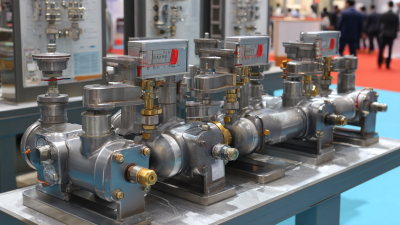
Exploring Flow Control Valve Trends and Market Growth at 2025 Canton Fair: Key Industry Insights