
What Is PSA Activated Carbon and How Does It Work?

PSA Activated Carbon describes carbon adsorbents used in pressure swing adsorption systems to separate or purify gases. The idea is practical: gas molecules interact differently with a porous surface. Under pressure, some components are held more strongly. When pressure falls, the bed releases much of what it captured and can be used again. The cycle repeats. Small changes in pressure, flow, or timing matter.

Professor Ralph T. Yang is a recognized researcher in adsorption and gas separation. A careful paraphrase of the principle in his published work is that gas separation depends on differences in how mixture components interact with an adsorbent. That distinction is important. “Activated carbon” and “carbon molecular sieve” are not interchangeable labels. PSA systems may use different adsorbents for different jobs, and many gas-separation units rely on carbon molecular sieve rather than ordinary activated carbon. The exact bed design depends on the feed gas, target purity, moisture, and operating conditions.

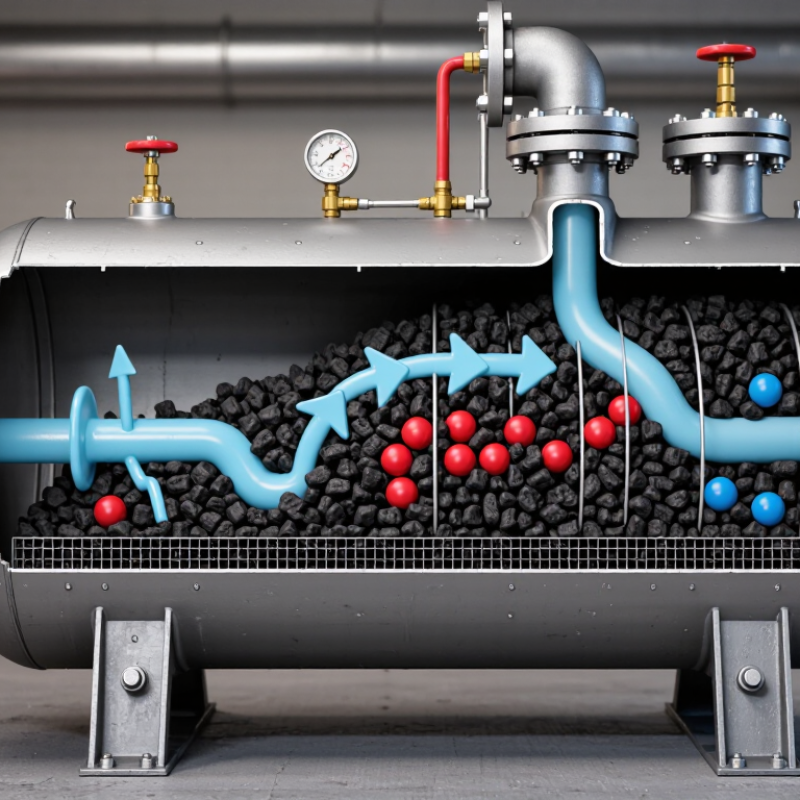
Picture a packed column: dark granules sit inside a steel vessel while compressed gas passes through. One component is preferentially retained; another leaves in the product stream. Then the vessel depressurizes, releasing adsorbed gas and preparing the bed for another cycle. It sounds tidy. Real systems are less perfect. Dust, water, uneven flow, and aging media can reduce performance, so operators monitor pressure and product quality. This guide explains how PSA Activated Carbon works, where it fits, and what to check before choosing an adsorbent.
What Is PSA Activated Carbon and How Does It Work?

What Is PSA Activated Carbon?

PSA activated carbon is activated carbon used as an adsorbent in pressure swing adsorption systems. It is not a separate chemical type. Gas flows through carbon pellets or granules under pressure, and selected molecules attach to the material’s internal pore surfaces. When pressure drops, many adsorbed molecules are released, allowing the carbon bed to be reused. This is adsorption, not absorption. The U.S. Environmental Protection Agency’s technical guidance reports that activated carbon can have a surface area of roughly 500–1,500 square metres per gram. That extensive pore network helps explain its usefulness, though surface area alone does not predict performance.

In hydrogen purification, carbon beds may capture water vapour, carbon dioxide, and heavier gases before or alongside other adsorbents. The U.S. Department of Energy describes pressure swing adsorption as a method for separating hydrogen from mixed gas streams. Multiple vessels commonly cycle at different times, so one bed can adsorb while another regenerates. The practical result depends on pressure, temperature, gas composition, moisture, and carbon pore structure. Small details matter. A wet feed, for example, can occupy adsorption sites and reduce capacity for target contaminants. Operators therefore monitor outlet gas and cycle conditions; the carbon specification alone is not enough. PSA systems are efficient, but their performance needs real feed testing.

How Activated Carbon Captures Gas Molecules

Activated carbon captures gas molecules by adsorption, not by soaking them up like a sponge. Its structure contains an enormous internal surface, lined with tiny pores. As gas flows through a carbon bed, molecules diffuse into these pores and cling to the pore walls through weak intermolecular forces. Small pores matter. Their size and surface chemistry influence which molecules are held more readily.

In pressure swing adsorption, or PSA, the gas mixture passes through the carbon bed under elevated pressure. Some components are retained more strongly, while others move through the bed and form the product stream. The separation is not simply a matter of “large” and “small” molecules. Molecular shape, concentration, temperature, humidity, and pore structure can all affect performance. Water vapor can compete for adsorption sites, for example, so moisture control may be important in a real system.

When pressure drops, the balance changes. Retained molecules leave the carbon, allowing the bed to be used again. This release is called regeneration. It takes time and does not always remove every molecule; operating conditions and carbon condition matter. It is not magic. Engineers assess the feed gas and test the adsorbent, because a carbon that works well for one mixture may perform poorly for another.

How Pressure Swing Adsorption Regenerates the Carbon

What Is PSA Activated Carbon and How Does It Work?

How Pressure Swing Adsorption Regenerates the Carbon

Pressure swing adsorption (PSA) uses activated carbon as a reusable surface, not a disposable filter. At higher pressure, gas molecules enter the carbon’s pores and adsorb onto its internal surfaces. The U.S. EPA’s 2017 Air Pollution Control Cost Manual describes commercial activated carbon with roughly 800–1,200 square metres of surface area per gram. That enormous area creates many adsorption sites. Which gases attach most strongly depends on pressure, pore structure, and gas composition.

To regenerate the carbon, the system lowers pressure, sometimes using a vacuum. The reduced pressure encourages captured molecules to leave the pores and exit as a concentrated gas stream. The bed can then be repressurized and returned to service. In a typical unit, valves switch between beds, so one bed adsorbs while another regenerates. The timing matters: switching too early wastes capacity; switching too late can let unwanted gas pass through. Not perfectly, though. Real cycles lose efficiency through heat changes, leaks, and incomplete desorption.

Tips: Track outlet-gas concentration and pressure during each cycle. A rising outlet reading can signal that the bed needs to switch sooner. PSA is not ideal for every contaminant; some applications use steam or heat instead. Check the gas mixture and operating conditions before selecting a regeneration method.

How a PSA Activated Carbon System Operates

A pressure swing adsorption (PSA) system separates gases by cycling them through beds of porous activated carbon. At higher pressure, selected gas molecules cling to the carbon’s internal surfaces. Other gases pass through as the product stream. The carbon is not a simple screen. Its pore structure and surface chemistry influence which molecules it captures.

A typical unit uses several beds. One bed adsorbs contaminants while another releases them as pressure drops; a small purge helps clear the captured gases. Then the bed is repressurized and returns to service. The cycle repeats. U.S. Department of Energy guidance on hydrogen production describes PSA as a route to hydrogen purities up to 99.9%, though actual results depend on feed composition and system design. Activated carbon may work alongside other adsorbents, rather than doing every separation alone. Operators monitor pressure, flow, and product purity, because a small change in feed conditions can affect performance. The uncomfortable detail: a high purity reading does not, by itself, reveal how much product gas was lost during regeneration.

What Is PSA Activated Carbon and How Does It Work?

How a PSA Activated Carbon System Operates

During adsorption, feed gas enters the activated-carbon bed at higher pressure, where the adsorbent retains selected components. Depressurization and a low-pressure purge help release those components and regenerate the bed; the vessel is then repressurized for another cycle. The pressure values shown are illustrative, not universal operating setpoints.

Where PSA Activated Carbon Is Used and What Affects Its Performance

PSA activated carbon is used in systems that separate or clean gases by changing pressure across packed beds. In nitrogen generation, carbon molecular sieve selectively slows oxygen, allowing nitrogen-rich gas to leave the bed. Other carbon grades can capture carbon dioxide, water vapor, or trace organic compounds, depending on their pore structure and surface chemistry. The media must match the gas task. One grade rarely suits every duty.

Performance depends on feed conditions and operating discipline. High humidity can occupy pores and reduce useful capacity. Higher temperatures often weaken adsorption, while pressure, flow rate, and cycle timing affect how much gas the bed can treat. Particle size matters too: small particles can improve contact, but may increase pressure drop. Uneven packing can create channels. That is a problem. Dust, oil mist, and changing feed composition may also shorten service life. Operators should track outlet gas quality and pressure drop, then compare readings with the system’s design limits. Lab data helps, but real performance can differ. I would not judge a bed by one good sample; trends across several operating cycles give a more reliable picture.