
What is a Miniature Circuit Breaker and How Does It Work?

In the world of electrical safety, the Miniature Circuit Breaker (MCB) plays a crucial role. Industry expert Dr. Emily Harrison states, "An MCB protects circuits from overloads and short circuits effectively." This statement highlights the importance of these devices in modern electrical systems.

MCBs are designed to automatically switch off electricity flow during faults. They are compact and reliable, making them a preferred choice in residential and commercial setups. Many people may overlook their significance until a power issue arises. This can lead to reflections on the reliability of our electrical systems.

Understanding how a Miniature Circuit Breaker operates is essential for anyone dealing with electrical installations. Regular checks and awareness can prevent potential hazards. Although MCBs are dependable, no device is infallible. Regular maintenance is a practice that should not be ignored.
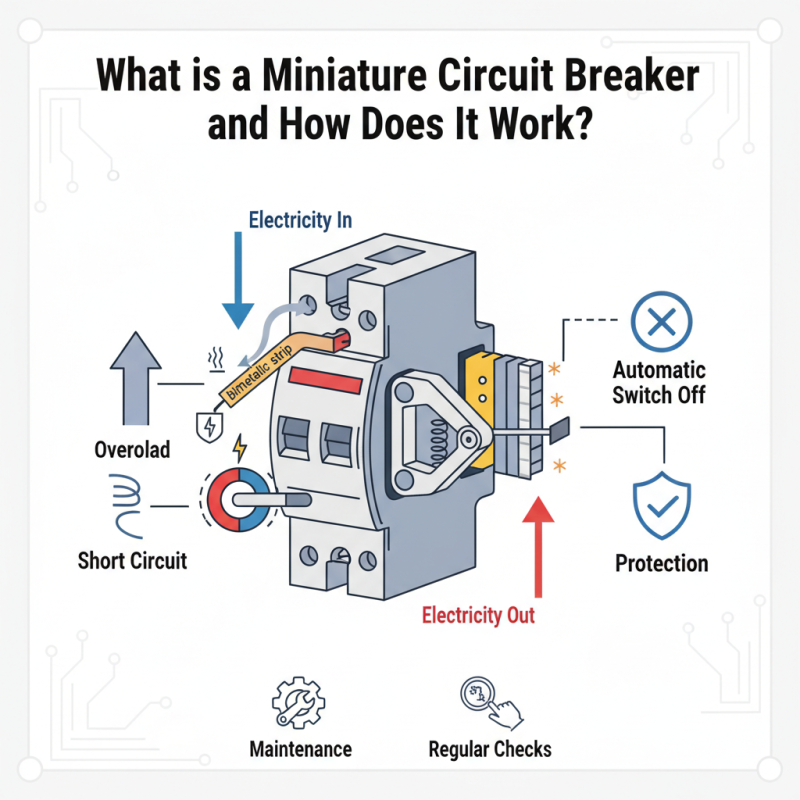
What is a Miniature Circuit Breaker and How Does It Work?

What is a Miniature Circuit Breaker?

A Miniature Circuit Breaker (MCB) is a crucial component in electrical systems. It protects circuits from overload and short circuits. When the current exceeds a safe level, the MCB automatically trips. This prevents damage to the electrical appliances and wiring. MCBs are compact and designed for easy installation in distribution boards.

Tips: Regularly check your MCBs. Ensure they function correctly. If an MCB trips frequently, it may indicate an underlying issue. Don't ignore such signs.

MCBs come in various ratings. Each rating corresponds to a specific maximum load. Choosing the right MCB helps balance safety and efficiency. If the rating is too high, it might not trip in time. If it's too low, it can trip unnecessarily.

Tips: Always consult with a professional for proper selection. An incorrect MCB can lead to serious problems. Understand your circuit’s requirements fully before making a choice. Stay informed about your electrical systems.

The Functionality of Miniature Circuit Breakers

Miniature circuit breakers (MCBs) play a crucial role in electrical safety. They automatically switch off circuits during overloads or short circuits. This actions helps prevent potential fires or damage to electrical devices. Unlike fuses, MCBs can be reset without replacement. This feature offers convenience in daily use.

The functionality of MCBs revolves around simple mechanical and thermal principles. When excessive current flows, a bimetallic strip inside heats up. This strip bends, triggering the switch mechanism. Another advantage is their ability to trip quickly in case of a short circuit, protecting your home or workplace. Occasionally, MCBs may trip without apparent reasons, leaving users puzzled.

Understanding the functionality of these devices can lead to better electrical management. Regular maintenance checks are necessary. Sometimes, overloads can occur from multiple high-demand appliances on one circuit. Users often overlook this and find themselves in trouble. Reflecting on current setups is essential for safety.

What is a Miniature Circuit Breaker and How Does It Work? - The Functionality of Miniature Circuit Breakers

Feature Description Importance
Current Rating Indicates the maximum current the breaker can handle without tripping. Prevents overload and protects the circuit.
Voltage Rating Indicates the maximum voltage the breaker can operate under safely. Ensures compatibility with the electrical system.
Breaking Capacity The maximum fault current that can be interrupted by the breaker. Critical for safety in protecting against short circuits.
Tripping Mechanism The method by which the circuit breaker disconnects power during a fault. Provides protection and prevents electrical fires.
Types of Protection Includes overload, short circuit, and earth fault protection. Ensures comprehensive safety for electrical installations.
Reset Mechanism Allows manual or automatic reset after tripping. Simplifies restoration of service after a fault.

Components and Design of a Miniature Circuit Breaker

Miniature Circuit Breakers (MCBs) are critical components in modern electrical systems. Their design combines several key elements, ensuring safety and reliability. An MCB typically features a switch mechanism, a bimetallic strip, and an electromagnetic coil. The switch is the user interface, allowing easy control of electrical circuits.

The bimetallic strip plays a vital role in overcurrent protection. It bends with heat generated by excessive current, triggering the switch to break the circuit. Meanwhile, the electromagnetic coil provides instantaneous protection against short circuits. When high current flows, it creates a magnetic force that snaps the switch open.

**Tip:** Regularly inspect your MCBs for signs of wear or damage. A faulty breaker may not trip when it should, leading to potential hazards.

MCBs are designed to handle various loads, typically rated from 6A to 125A. According to industry reports, MCBs can reduce the risk of electrical fires significantly. However, installation errors are common. Poor connections or incorrect ratings can lead to inadequate protection.

**Tip:** Always consult a professional for installation. Ensure that the MCB rating matches your circuit requirements. This small step can prevent large issues later.

Miniature Circuit Breakers Performance Data

This chart represents the average tripping currents for various types of Miniature Circuit Breakers (MCBs) commonly used in electrical installations. The performance of MCBs is crucial for safety and efficiency in preventing overloads and short circuits.

How Miniature Circuit Breakers Protect Electrical Circuits

Miniature Circuit Breakers (MCBs) play a crucial role in protecting electrical circuits. They automatically disrupt the flow of electricity when a fault occurs. This helps prevent damage to devices and lowers the risk of fires. According to a recent industry report, MCBs can reduce electrical fire hazards by up to 70%. This statistic highlights their effectiveness and importance in modern electrical systems.

MCBs respond to overloads and short circuits quickly. When current exceeds safe levels, the internal mechanism trips, cutting off the faulty circuit. Manufacturers design these devices to handle various ratings suitable for different applications. However, improper installation can result in failure. A survey conducted by the Electrical Safety Foundation International revealed that around 30% of electrical mishaps stem from user errors. This highlights the necessity for proper training and awareness.

Regular maintenance is essential for MCB efficacy. Infrequent inspections may lead to unnoticed wear and tear. Some MCBs may not trip even under fault conditions if not tested regularly. Many industry experts recommend monthly checks to ensure MCBs are operational. Such measures could significantly reduce risks associated with electrical faults in residential and commercial environments.

Applications of Miniature Circuit Breakers in Electrical Systems

Miniature Circuit Breakers (MCBs) play a vital role in electrical systems. They protect against overloads and short circuits. These devices automatically cut off electricity flow when there’s an issue. This protection prevents fire hazards and equipment damage. MCBs are commonly found in residential and commercial buildings.

Applications of MCBs are broad. In homes, they secure circuits powering lights and appliances. In industrial settings, they safeguard larger machinery. MCBs are crucial for both high-voltage and low-voltage applications. They offer a reliable solution for electrical safety. However, determining the right type and rating can be tricky. An incorrect choice may lead to frequent tripping or insufficient protection.

Placement is also important. Installing MCBs in the right location ensures optimal functionality. They should be easily accessible for manual resets. Maintenance is often overlooked, yet it is essential for longevity. Regular checks can identify wear and ensure they operate as intended. Ensuring that MCBs are correctly specified and regularly maintained can significantly enhance safety in any electrical system.