
How to Choose the Right 8K Stainless Steel Plate?

Choosing the right 8k Stainless Steel Plate is less about chasing the brightest reflection and more about matching the finish to its intended use. Under showroom lights, two sheets may appear nearly identical. In everyday conditions, fingerprints, fine scratches, and uneven reflections can quickly reveal differences. “8K” usually refers to a highly polished, mirror-like finish; it does not identify the steel grade, thickness, or corrosion resistance. That distinction matters. Suppliers may also use finish terms differently, so request a written specification and a sample before placing a large order.

A practical comparison should consider the plate’s grade, dimensions, thickness, surface quality, and protective packaging. For example, a decorative wall panel may prioritize consistent reflections, while a component used near moisture may need a grade suited to that environment. Grades such as 304 and 316 have different properties, but neither should be selected by name alone. Check the application and the supplier’s material documentation. Look at samples in lighting similar to the final installation, and inspect their edges as well as their faces. Small defects show up fast on polished steel.

Looks simple. It isn’t always. This guide explains how to assess finish quality, verify product details, and compare suppliers without relying on appearance alone. It also considers fabrication needs, handling, and cost, since the lowest-priced sheet may require more rework. A careful choice begins with clear requirements—and a willingness to question a sample that seems perfect.
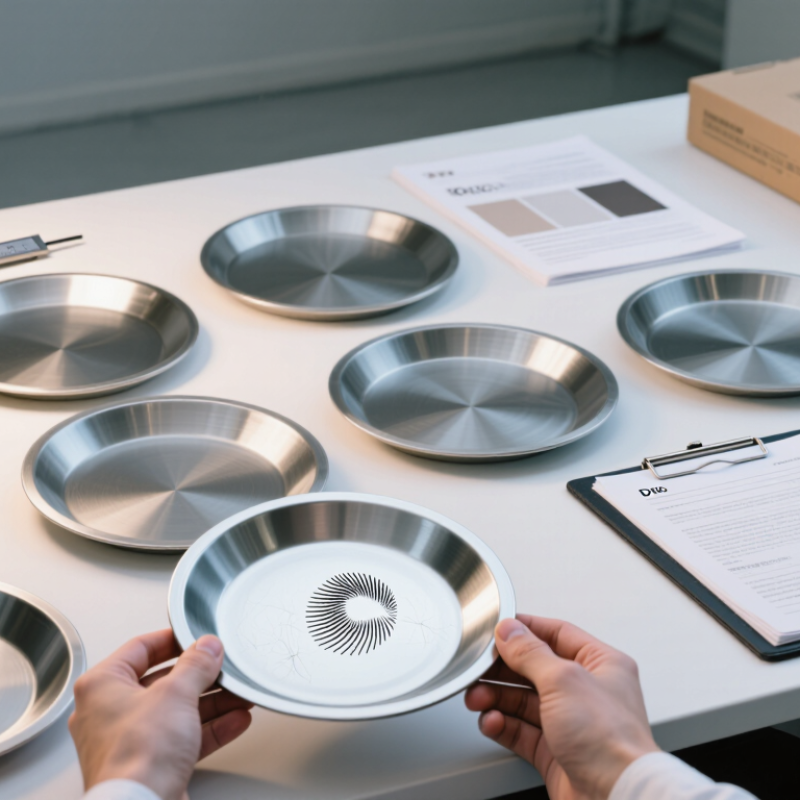
How to Choose the Right 8K Stainless Steel Plate?

What Defines an 8K Stainless Steel Plate?

An 8K stainless steel plate is defined by its surface, not its alloy grade. “8K” is a commercial finish term, usually describing a highly reflective, mirror-like surface. ASTM A480/A480M describes No. 8 as a mirror-like finish made by polishing with progressively finer abrasives and then buffing. In practice, the plate should reflect a nearby object clearly, with no obvious directional polishing lines. A mirror is not a grade.

The label alone does not guarantee a specific roughness value. ASTM’s finish description is visual, so suppliers may use “8K” differently. Ask for a surface sample, the polishing method, and an agreed inspection condition; fingerprints and fine scratches can be hard to judge under uneven light. The International Stainless Steel Forum reported 58.4 million tonnes of global stainless steel melt-shop production in 2023. That broad product range makes precise finish specifications useful during purchasing. Still, a bright surface can hide waviness. Check the plate under direct and angled light before accepting it.

Which Application Requirements Should Guide Your Choice?

An 8K stainless steel plate is selected for its mirror-like reflection, but appearance is only one part of the decision. Start with the service environment. Indoor wall panels may need a different alloy from equipment exposed to salt spray, cleaning chemicals, or frequent moisture. Grade 304 suits many general interior uses; grade 316 may be a better candidate where chloride exposure is a concern. Confirm suitability against the actual conditions, not a label alone.

Think about loads and fabrication, too. A decorative panel and a load-bearing component have very different thickness needs. Ask how the plate will be cut, bent, joined, and supported. Mirror finishes show fingerprints, fine scratches, and uneven weld repairs clearly. That can matter on a busy counter or lift interior. Request a finish sample and check it under the lighting used at the installation site. A small sample can still hide variation across a full sheet, so confirm finish expectations with the supplier.

Tips: Specify alloy, thickness, dimensions, and finish separately. Check protective film and handling procedures before delivery. Keep in mind that 8K describes surface appearance, not strength or corrosion performance. One detail is easy to overlook: highly reflective surfaces may need more careful cleaning, and the maintenance plan should match the location.

How Do Steel Grade, Thickness, and Dimensions Affect Selection?

How to Choose the Right 8K Stainless Steel Plate?
How Do Steel Grade, Thickness, and Dimensions Affect Selection?

An 8K finish is highly reflective, so the underlying steel grade matters. Grade 304 suits many indoor and mild outdoor applications. For frequent contact with salt, cleaning chemicals, or coastal air, grade 316 may offer better corrosion resistance. Neither grade is immune to poor maintenance. Check the service environment and supplier specifications before ordering. A mirror finish can reveal small scratches and waviness that a brushed surface might hide.

Thickness affects stiffness, weight, and fabrication. A thin plate is easier to shape, but it may flex or show handling marks. A thicker plate feels more rigid, yet adds weight and can increase cutting and installation demands. Dimensions matter, too: confirm length, width, flatness, and tolerances against the finished assembly, not just the drawing. An overlooked edge allowance can leave too little material for trimming. Measure twice.

Tips: Ask for a sample under the lighting used at the installation site. Inspect both the reflective surface and plate edges. Confirm whether protective film will remain during transport, and clarify how the plate should be stored. One practical choice may not be the shiniest one; it is the plate whose grade, thickness, and dimensions fit the real conditions.

How to Choose the Right 8K Stainless Steel Plate

8K describes a highly reflective, mirror-like surface finish; it does not specify the steel grade. Choose a grade suited to the service environment, then select thickness and sheet dimensions to meet strength, weight, fabrication, and installation requirements.

How to read the chart: Estimated mass is calculated using a nominal stainless steel density of 8,000 kg/m³. At the same thickness, a larger plate weighs more in proportion to its area. Actual mass varies with the grade’s density and the plate’s manufacturing tolerances. For grade selection, compare corrosion resistance and service conditions—for example, 316 stainless steel contains molybdenum and generally offers better resistance to chlorides than 304.

How Can You Assess the 8K Finish and Plate Quality?

To assess an 8K finish, inspect the plate under both broad, even light and a small point light. The broad light reveals haze; the point light makes fine scratches and polishing marks easier to spot. A good mirror finish should reflect a straight window frame or ruler without obvious waviness. Look from several angles. One glance can miss a lot.

Keep the protective film on until you are ready to inspect, then check a clean, small area if the supplier permits. Dust can look like a surface defect, while trapped particles may leave marks when rubbed. Use a soft, clean cloth, not an abrasive pad. Check for uniform color and gloss across the sheet, especially near the edges. The “8K” label alone is not a complete quality test; terminology and appearance can vary between suppliers.

Plate quality matters too. Confirm the stainless grade, thickness, and stated tolerances against the order documents, and inspect the edges for burrs or dents. A straightedge can help reveal bowing or unevenness. Ask for a finish sample from the same production run when appearance is critical. This takes extra time. Still, comparing one sample with the full plate may prevent an expensive mismatch. I would not judge finish from a phone photo; reflections and lighting can hide flaws.

What Should You Verify Before Purchasing?

Before purchasing an 8K stainless steel plate, ask for the exact grade, thickness tolerance, and written finish specification. “8K” usually describes a highly reflective, mirror-like surface, but the label alone does not set a universal roughness limit. Request the supplier’s measured surface roughness and inspection method, plus clear photos taken under consistent lighting. Ask for a material test certificate linking the heat number to the plate; check that grade and chemistry match your order. Small details matter.

ISSF reported 58.4 million tonnes of global crude stainless steel production in 2023, 4.6% above 2022, in its annual production statistics. That scale makes traceability useful: confirm the certificate, packing list, and plate markings identify the same batch. Check the protective film for bubbles or lifted edges, and inspect for scratches, polishing lines, stains, and waviness. Ask how flatness and thickness were measured, and whether inspection covers the full sheet or only sampled points. I would not accept a showroom sample as proof of every plate’s finish. It is an easy mistake. Record agreed acceptance criteria in the purchase order, including how defects will be judged on delivery.

How to Choose the Right 8K Stainless Steel Plate? - What Should You Verify Before Purchasing?

What to Verify What to Check Example Purchasing Requirement How to Confirm
Meaning of “8K” Confirm that “8K” refers to a mirror-polished stainless steel finish, commonly called a No. 8 or mirror finish—not a steel grade or a universally defined roughness value. State the required mirror appearance, viewing conditions, and approved sample in the purchase specification. Compare the delivered plate with an approved sample under consistent lighting. Finish terminology and appearance can vary between suppliers.
Stainless steel grade Choose the alloy for the service environment. Type 304 is commonly used for general indoor applications; Type 316 contains molybdenum and is often selected for more demanding chloride exposure. For example, specify Type 304 or Type 316 to the applicable product standard. Typical ASTM composition limits include 18–20% chromium and 8–10.5% nickel for 304; 16–18% chromium, 10–14% nickel, and 2–3% molybdenum for 316. Request a material test certificate (MTC). Positive material identification (PMI), such as X-ray fluorescence, can help check alloying elements; it does not measure carbon reliably.
Product form and standard Verify that the material is plate or sheet in the required form, rather than a different product category, and that the governing standard is stated. Specify the applicable standard and edition—for example, ASTM A240/A240M for stainless steel plate, sheet, and strip—or the relevant regional standard. Check the order, markings, and MTC for the grade, product form, standard, and heat or lot identification.
Thickness and tolerances Confirm the nominal thickness, agreed tolerance, and whether the measurement applies before or after polishing. Example: 1.5 mm nominal thickness, with tolerances defined by the applicable standard and purchase agreement. Measure at several points using a calibrated micrometer. Account for any finishing allowance where relevant.
Length and width Specify finished dimensions, dimensional tolerances, edge condition, and any cut-outs or processing requirements. Example stock size: 1,219 × 2,438 mm. Confirm availability and tolerances before ordering; stock sizes are not universal. Measure the delivered plate and inspect its edges. Record agreed tolerances on the purchase order.
Mirror finish quality Check reflectivity, uniformity, polishing direction or pattern, and whether the finish meets the intended decorative or functional use. Specify a reference sample and acceptable appearance. Do not assume that a single Ra value defines every “8K” finish. Inspect the surface under agreed lighting and viewing angles. If roughness is critical, agree on a measurement method and acceptance limit in advance.
Flatness and surface condition Set acceptable limits for waviness, dents, scratches, stains, pits, and other visible defects; clarify whether minor polishing marks are acceptable. Define flatness and cosmetic acceptance criteria based on the plate dimensions and end use rather than relying on a generic “mirror finish” description. Inspect the full plate before removing protective film. Use a straightedge or other agreed method for flatness checks.
Corrosion and cleaning needs Match the grade to exposure to moisture, cleaning chemicals, salts, and other corrosive agents. Mirror polishing does not make an unsuitable alloy corrosion-proof. Choose the grade based on the actual environment; consider 316 for some chloride-exposed applications, subject to a corrosion review. Review the service conditions and cleaning process with the project specification. Avoid chloride-containing cleaners unless approved for the application.
Protective film and traceability Confirm film type, coverage, removal method, packaging, and traceability from the plate to its material certificate. Specify protective film suitable for transport and fabrication, plus heat or lot identification and required inspection documents. Check that film is intact on receipt and that plate markings correspond to the MTC. Test film removal on a sample if adhesive residue is a concern.

Purchasing note: The example dimensions and requirements are illustrative, not universal acceptance limits. Put the exact grade, standard, tolerances, finish sample, inspection criteria, and documentation requirements in the purchase order.