
How to Choose the Best RCC Pole Making Machine
Choosing a Rcc Pole Making Machine is a production decision, not just a purchase. The right equipment should match the pole dimensions, output targets, available floor space, and local power supply. A machine designed for steady, repeatable production may suit one factory, while a smaller operation may value flexible tooling more. The difference shows up in practical details: mold changes, vibration consistency, curing arrangements, and the time required to handle each pole. Small details matter.
Before comparing models, define the poles you intend to make. Record their length, diameter, reinforcement layout, and expected daily quantity. Then ask manufacturers for technical specifications, installation requirements, maintenance guidance, and examples of comparable installations. Request a production trial or sample poles where possible. A brochure cannot show whether a mold releases cleanly or whether the finished surface meets your needs. Verify claims against measurable data.
Price deserves attention, but the lowest quotation may omit tooling, operator training, spare parts, or commissioning support. Check how wear components are replaced and whether routine servicing can be handled locally. Also consider safe material handling and clear operating procedures. These affect dependable production, not merely convenience. There is no universal best machine; trade-offs are real. A high-capacity model can sit underused if orders fluctuate, while a basic unit may constrain growth. Compare the complete production setup, discuss uncertainties openly, and choose equipment that fits both present requirements and realistic plans. A careful decision begins with evidence, not a bold promise.
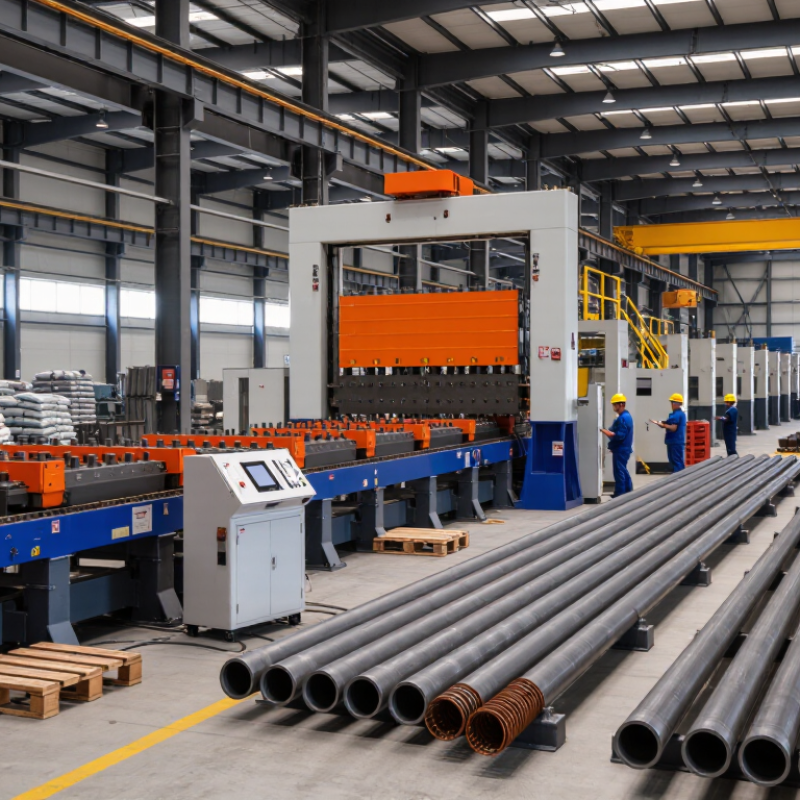
Identify Your RCC Pole Production Requirements
Before comparing machines, define the poles your plant must make. Record pole length, base and tip diameters, wall thickness, reinforcement design, and concrete strength. Also estimate daily output, product mix, and seasonal demand. The IEA’s 2023 report, Electricity Grids and Secure Energy Transitions, says more than 80 million kilometres of grids must be added or refurbished by 2040. That global outlook does not predict your local orders, but it underscores why production plans should allow for changing demand. Demand varies. Use customer specifications and recent order records, not a single optimistic forecast.
Next, match the machine’s working range to your actual mould sizes and required output. Check spinning speed control, mould changeover time, vibration, curing arrangements, and space for safe handling. Ask how operators verify dimensions and concrete consistency between batches; a fast cycle is not useful if rejects fill the yard. Measure twice. Compare stated capacity with your planned shifts, maintenance stops, and curing time. A spreadsheet can still miss awkward details, such as whether a long mould can be moved through the workshop doorway. Request a trial using your mix design and a representative pole mould. Review finished-pole dimensions, surface condition, and repeatability before committing to a production rate.
Choose an RCC Pole Machine That Matches Your Production Target
Estimated casting throughput per active mold position during a shift with 6 productive hours (360 minutes). The figures are calculated as 360 minutes divided by the casting-cycle time shown; compare them with your daily order target when assessing machine capacity.
Planning estimate only: actual output depends on mold turnover, labor, concrete preparation, handling, and curing arrangements. Casting throughput is not the same as finished, cured poles per shift.
Compare Machine Types and Molding Processes
How to Choose the Best RCC Pole Making Machine
Compare the machine to the molding process your pole design requires. Centrifugal machines rotate a steel mold around a reinforced cage. The spinning action compacts concrete toward the mold wall and helps form a hollow pole. Operators must control rotation speed, cycle time, and concrete consistency. A poor mix can leave uneven walls or weak spots. It is not a set-and-forget process.
Vibration molding uses vibration to compact concrete inside a stationary mold. It may suit particular pole shapes or production setups, but results depend on mold design and vibration control. Compare usable mold length, diameter range, loading method, and output per shift. Check how easily crews can clean molds and inspect reinforcement placement. A machine with impressive capacity may still slow production if mold changes take too long. Details matter. Ask for process data using a pole size and concrete mix close to your own. Then assess the finished pole, not just the machine’s stated speed.
Tips: Confirm that the machine matches your pole drawings and reinforcement cage. Review sample surface finish, wall thickness consistency, and demolding steps. Leave room for operator learning; actual output may differ from estimates.
Evaluate Capacity, Performance, and Technical Specifications
How to Choose the Best RCC Pole Making Machine
Evaluate capacity against your actual pole designs, not a brochure’s maximum output. Check mold length and diameter, reinforcement-cage compatibility, production cycle time, and poles produced per shift. Ask the supplier to demonstrate a full cycle using your target dimensions. The USGS Mineral Commodity Summaries 2024 estimated global cement production at 4.1 billion metric tons in 2023. That scale highlights the importance of dependable material handling, but it does not predict your plant’s output. Your mix, crew, curing setup, and downtime matter.
Performance depends on more than motor power. Review rotational speed ranges, vibration control, drive ratings, and how operators adjust settings for different pole sizes. Request measured noise, power consumption, and cycle-time data under comparable conditions. Inspect welds, bearings, guards, and access points; small maintenance obstacles can quietly reduce availability. A polished specification sheet can still miss real production problems. I would treat unverified output claims cautiously.
Tips: Record cycle times across several runs, and note rejects and changeover delays. Compare results, not promises. Ask for technical drawings, installation requirements, and a clear maintenance schedule before choosing.
Assess Build Quality, Safety, and Maintenance Needs
How to Choose the Best RCC Pole Making Machine
Assess Build Quality, Safety, and Maintenance Needs
A machine may look solid in a showroom, but inspect its frame, welds, and moving parts closely. Ask for drawings, rated capacity, and details about the steel used. Check whether the mould closes evenly and the rotating assembly runs without visible wobble. Small alignment problems can affect pole consistency and increase wear. Request a demonstration with a realistic production setup, not an empty machine running briefly.
Safety details deserve equal attention. Guards should cover rotating parts, and emergency stops must be easy to reach from the operator’s position. Check the control panel for clear labels and protected wiring. Look at how moulds are lifted and secured; awkward handling can create avoidable risks. A quiet demonstration is not enough. Ask how operators are trained and what checks are expected before each shift.
Maintenance needs should fit the skills and resources available at your plant. Ask how often bearings, belts, and drive components need inspection, and whether common spares are readily available. Look for accessible grease points and areas that can be cleaned without dismantling major assemblies. Keep a sample maintenance schedule and confirm the supplier’s service response. It is easy to focus on purchase price. That can be shortsighted; yet a detailed checklist cannot predict every production issue. A trial run under your actual conditions may reveal what specifications miss.
Compare Supplier Support and Total Ownership Costs
How to Choose the Best RCC Pole Making Machine
Compare Supplier Support and Total Ownership Costs
When comparing RCC pole making machines, look beyond the purchase price. Ask who installs the equipment, trains operators, and responds when a control fault stops production. Confirm spare-parts availability, service hours, and typical repair times in writing. A cheap machine can become an expensive one. A delayed replacement bearing may leave a production line idle while workers wait.
Estimate ownership costs over several years. Include energy use, molds, wear parts, maintenance labor, shipping, and operator training. McKinsey’s 2018 analysis of predictive maintenance across industrial settings estimated maintenance-cost reductions of 10–40%. This is a broad benchmark, not a promise for pole-making equipment. Still, it shows why service planning and timely maintenance deserve a place in the budget. Compare supplier quotes using the same production assumptions, and ask for references from plants with similar output. I would also check how clearly each supplier explains exclusions; that detail is easy to overlook.
Tips: Request a sample maintenance schedule and a priced list of common spare parts. Ask the supplier to specify response times and training coverage. Keep a small allowance for unexpected repairs—estimates are rarely perfect.
How to Choose the Best RCC Pole Making Machine - Compare Supplier Support and Total Ownership Costs
The comparison below uses anonymized supplier profiles and indicative planning ranges. Actual costs depend on machine capacity, pole specifications, automation, shipping route, and local labor and energy rates.
| Comparison dimension | Option A: Entry-level, limited support | Option B: Mid-range, remote support | Option C: Higher-support package |
|---|---|---|---|
| Best suited to | Buyers with in-house mechanical and electrical maintenance skills | Small-to-medium producers seeking a balance of cost and assistance | New or expanding plants that value commissioning and ongoing service |
| Typical supply scope to verify | Core machine; molds, controls, and auxiliary equipment may be separate | Machine with a defined mold set and standard control package | Machine, agreed tooling package, commissioning, and documented handover |
| Installation and commissioning | Usually buyer-arranged; confirm alignment and start-up requirements | Remote guidance may be available; on-site service often costs extra | On-site service may be included or offered as a priced option; confirm travel and labor terms |
| Operator and maintenance training | Manuals and basic instructions; training depth varies | Remote training and operating documentation are commonly offered | Structured start-up training, maintenance checks, and operating procedures may be included |
| After-sales response to ask for | Written contact route, working hours, and expected response time | Remote troubleshooting; ask about time-zone coverage and escalation | Named service contact and defined escalation process; confirm response commitments in writing |
| Warranty checks | Confirm duration, covered parts, exclusions, and who pays freight and labor | Compare coverage for mechanical, electrical, and wear components separately | Check whether commissioning is required for coverage and whether service travel is excluded |
| Spare-parts planning | Identify critical parts and lead times before ordering; keep common wear parts on site | Request a recommended start-up spares list and parts pricing | Ask for parts list, availability commitments, and compatible component specifications |
| Indicative extra costs beyond machine price | Often higher uncertainty: freight, installation, tooling, and buyer-arranged technical support | Moderate: freight, optional site service, training, and initial spares | May have a higher quoted package price, but scope and service costs can be clearer |
| Illustrative 5-year ownership-cost index | 126–160 | 120–150 | 118–150 |
| How to interpret the index | Machine purchase price = 100; range adds indicative freight, setup, training, and routine spares | Same basis; remote support and included scope can reduce unexpected setup spending | Same basis; higher upfront price may be offset by included commissioning or clearer support scope |
| Costs not included in the index | Building and foundation work, utilities, cement and steel, labor, molds not included in the quote, financing, taxes, production losses, and unplanned downtime. Add these using local quotations and operating data. | ||
Buying tip: Compare written quotations with the same pole length, design, output target, mold count, automation level, delivery terms, installation scope, warranty conditions, and spare-parts list. The ownership-cost index is an illustrative comparison tool, not a supplier quotation or guaranteed market price.