
2026 Top Thermal Break Aluminum System Windows for Buyers
In 2026, buyers are looking beyond slim frames and polished finishes. Thermal Break Aluminum System Windows now sit at the center of energy performance, comfort, and durable building design. A polyamide insulating strip separates the interior and exterior aluminum sections. This reduces thermal bridging, surface condensation, and uncomfortable cold zones near the frame. The difference can be felt beside a large window on a winter morning.
The U.S. Department of Energy reports that windows can account for roughly 25% to 30% of residential heating and cooling energy use. That figure explains why frame design deserves more attention than a product brochure usually gives it. Meanwhile, the United Nations Environment Programme’s 2024 Global Status Report for Buildings and Construction states that buildings and construction consumed about 32% of global energy and produced approximately 34% of global carbon emissions. These numbers are broad, but they make window specification harder to dismiss.
Building-science expert Joseph Lstiburek has described the basic challenge simply: “A window is a hole in the wall.” A thermally improved system cannot erase that weakness. It can manage it better. Buyers should examine U-values, air leakage, water resistance, glass configuration, corner insulation, and verified test standards. A lower U-value is useful, but not enough.
Some product claims still feel too perfect. Real performance depends on installation, shading, orientation, and workmanship. That is the uncomfortable part. The best Thermal Break Aluminum System Windows may underperform when the sill is poorly sealed or the frame is incorrectly sized. This 2026 guide therefore focuses on tested evidence, practical details, and decisions that survive real buildings—not just showroom lighting.
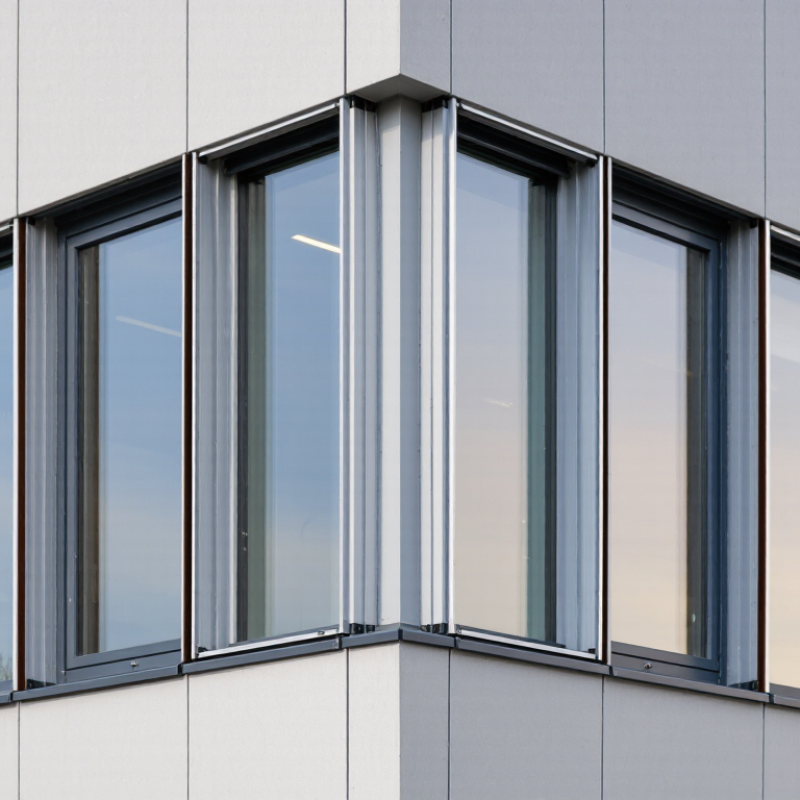
Thermal Break Aluminum Windows: Definition and Core Components
A thermal break aluminum window separates its exterior and interior metal sections with a low-conductivity insulating barrier. This barrier limits heat transfer through the frame. Polyamide strips are commonly used because they remain stable across changing temperatures. The frame still provides strength, slim sightlines, and resistance to weather.
Core components work as one assembly. The aluminum profiles support the window and carry wind loads. The thermal barrier interrupts the metal path. Insulated glazing reduces heat movement through the glass area. Warm-edge spacers can lower edge condensation. EPDM or similar gaskets help seal air and rain. Drainage channels guide water toward controlled outlets.
Small details matter. During site inspections, I check whether the thermal strips are continuous at corners and joints. A broken barrier can create a cold spot. Incorrect drainage may also cause hidden moisture. Hardware must be compatible with the frame depth and sash weight. Installation is equally important. Even a well-designed window can underperform when installers leave gaps around the perimeter.
Do not judge performance by aluminum thickness alone. Ask for tested U-values, air leakage data, and condensation guidance. These figures need context, including glazing type and installation conditions. A high specification does not guarantee a comfortable room. I have seen costly systems lose performance because the surrounding sealant was uneven. That is an uncomfortable reminder: the window and the wall must be evaluated together.
2026 Top Thermal Break Aluminum System Windows for Buyers
Thermal Break Aluminum Windows: Definition and Core Components
A thermal break aluminum window uses a low-conductivity insulating barrier, commonly reinforced polyamide, between the interior and exterior aluminum profiles. This reduces heat transfer while preserving aluminum’s strength, durability, and slim sightlines. Lower thermal conductivity indicates better insulation performance.
Representative thermal conductivity values at approximately room temperature. Actual values vary by alloy, formulation, moisture, temperature, and glazing construction.
Key Performance Criteria for Evaluating Window Systems
Choosing a 2026 thermal break aluminum window starts with measured performance, not frame color or marketing language. The U.S. Department of Energy estimates that windows can drive 25–30% of residential heating and cooling energy use (Energy Saver, 2024). Ask for whole-window U-factor, not only center-of-glass values. Lower numbers usually indicate better insulation. Small detail.
Solar Heat Gain Coefficient matters in different climates. A lower SHGC can reduce summer overheating, while a higher value may support winter solar gain. The National Fenestration Rating Council evaluates U-factor, SHGC, visible transmittance, and air leakage through standardized procedures (NFRC 100 and NFRC 400). Buyers should compare identical sizes and operating types. Otherwise, the comparison becomes weak. Check glazing layers, spacer design, thermal-break depth, and edge temperatures near the aluminum frame.
Air leakage, water resistance, and structural performance deserve equal attention. Testing under ASTM E283 and ASTM E331 can reveal leakage paths and water penetration risks. Installation remains critical; even a high-performing frame may fail around an uneven sill or poorly sealed joint. In humid areas, inspect condensation resistance and drainage details. The U.S. Department of Energy’s Building America guidance emphasizes continuous air and water control layers around openings. I would also request certified test reports, warranty terms, and installation records. One limitation remains: laboratory ratings cannot perfectly reproduce wind-driven rain, dust, or rushed workmanship on a real project.
Top Thermal Break Aluminum Window Systems in 2026
Thermal break aluminum systems are becoming a practical choice for energy-conscious buildings. A polyamide isolator separates the inner and outer aluminum frames, reducing heat transfer and interior condensation. The U.S. Department of Energy reports that windows can account for 25–30% of residential heating and cooling energy use. That figure makes frame design worth serious attention. In 2026, buyers should compare whole-window U-factor, solar heat gain coefficient, air leakage, and water resistance. Glass alone is not enough.
The UNEP Global Status Report for Buildings and Construction 2023 found that buildings used about 34% of global energy and created 37% of energy-related carbon emissions. Better window systems cannot solve this alone, but they can reduce heating and cooling loads. In project reviews, I look closely at corner joints, drainage paths, gaskets, and installation tolerances. Small gaps can weaken excellent laboratory results. A lower U-factor may also increase solar heat gain if the glass is poorly selected. That trade-off is easy to miss.
Tips: Request certified whole-window test results, not frame-only claims. Check the climate zone before choosing glass coatings. Ask for air-leakage data at the intended operating pressure. Confirm thermal-break continuity around locks, sashes, and mullions. Also inspect sample corners. They often reveal more than brochures. Mistakes still happen, especially when installers treat aluminum frames like ordinary windows.
Frame, Glass, Hardware, and Energy Efficiency Options
2026 Top Thermal Break Aluminum System Windows for Buyers
In 2026, buyers should inspect the frame before admiring the finish. A thermal break separates inner and outer aluminum sections with a low-conductivity polyamide strip. This reduces heat transfer around the sash and frame. Ask for verified U-values, not vague claims. Check the frame depth, corner joints, drainage paths, and gasket compression. A well-made corner should feel rigid, with no visible gaps or uneven sealant.
Glass choices change comfort quickly. Double glazing may suit mild climates, while triple glazing helps in colder regions. Low-emissivity coatings limit radiant heat loss without making rooms feel dark. Argon-filled cavities can improve insulation when the edge seal remains sound. Warm-edge spacers also reduce cold lines near the glass perimeter. Still, more panes are not automatically better. Weight, solar gain, and local winter temperatures must match the opening.
Hardware affects daily performance and long-term reliability. Multi-point locks should engage smoothly, without forcing the handle. Stainless or corrosion-resistant components are useful near humid or coastal areas. Select hinges according to sash weight, especially with triple glass. Ask how hardware is tested after repeated opening cycles. Small installation errors can defeat excellent components. I have seen tight windows perform poorly because the surrounding wall was not sealed correctly. That detail deserves more attention. Energy efficiency depends on the complete system, including fitting, orientation, shading, and ventilation—not only the product label.
Buyer’s Guide to Pricing, Installation, and Long-Term Value
2026 Top Thermal Break Aluminum System Windows for Buyers
A buyer’s price should cover the full window system, not only the aluminum frame. Thermal break profiles, glass, hardware, screens, delivery, and installation can change the final cost quickly. Ask for an itemized quotation with dimensions, opening types, glazing specifications, and warranty terms. Compare equal specifications. A cheaper quote may simply exclude flashing, trim, or site protection. That is a common mistake.
Tips: Request a sample corner section. Check the thermal barrier, gasket fit, drainage paths, and locking action. Confirm whether installation includes old-window removal and interior repairs. Keep every promise in writing.
Installation quality strongly affects long-term value. The opening must be measured after checking the wall condition, not guessed from old drawings. Installers should level the frame, leave controlled expansion space, seal the perimeter, and test each sash. Poor alignment can cause drafts, water entry, or difficult operation. Ask how the crew handles uneven masonry and rain during installation.
Thermal break aluminum windows can reduce heat transfer and improve indoor comfort, but performance depends on glass, orientation, shading, and ventilation. A high-rated frame cannot correct careless detailing. Maintenance is usually modest: clean drainage channels, inspect seals, and adjust hardware when needed. I would not judge value by energy savings alone. Better comfort, quieter rooms, durability, and fewer repairs may matter more over fifteen years.